As the United States and China continue to dominate the global stage, a group of countries occupying the space between superpowers and countries with limited power has been quietly shaping the international order. These “middle powers” – countries that are neither global giants nor minor players – have become increasingly significant in defining how influence and cooperation operate in a multipolar world.
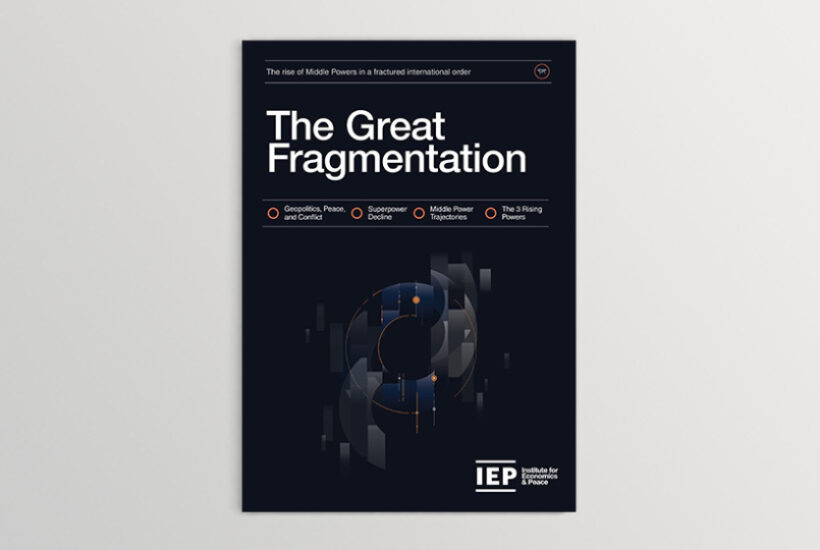
In the Great Fragmentation, released in January 2026 by the Institute for Economics & Peace, we explore how countries such as Indonesia and Saudi Arabia are adjusting their foreign and economic policies in response to China’s growing reach. Both have become more economically intertwined with Beijing over the past two decades, but their strategies differ in both depth and scope. Understanding these distinctions provides insight into how middle powers navigate the competing pulls of great-power rivalry while pursuing their own national interests.
The evolving relationships between China and these two middle powers illustrate a broader reality: the global order is increasingly multipolar. Traditional alliances are giving way to overlapping networks of cooperation shaped by economic necessity and strategic caution.
Indonesia’s relationship with China has grown steadily since the early 2000s, driven by economic opportunity and increased cooperation. Since 2005, Chinese foreign direct investment in Indonesia has exceeded USD 83 billion, with the majority being invested into the energy and metals sectors. The Chinese state-owned enterprise PowerChina operated 23 subsidiaries in 2021 in Indonesia and has managed over 135 projects worth an estidmated $11 billion, including hydropower plants, dams, and transport infrastructure.
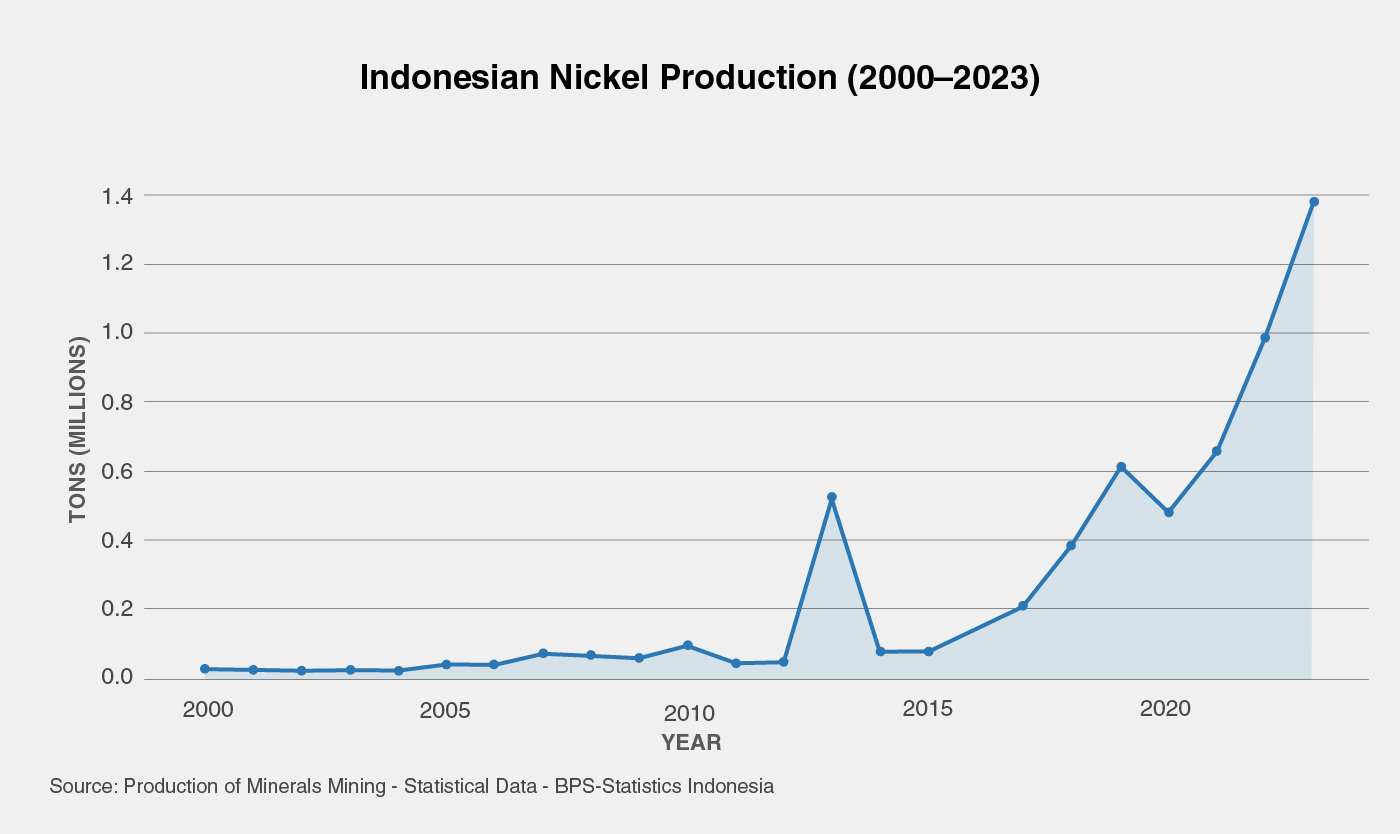
China’s investments have also targeted Indonesia’s abundant mineral wealth, particularly nickel, which is a key component in electric-vehicle batteries. Indonesia is producing more nickel than ever before, and China is investing in the growing industry. Jiangsu Delong has committed to invest $1.6 billion to build and operate nickel-smelting facilities, part of nearly $19 billion in total Chinese investment in Indonesia’s metals industry. For Jakarta, this partnership supports its ambitions to climb the manufacturing value chain and establish itself as a global hub for energy transition materials.
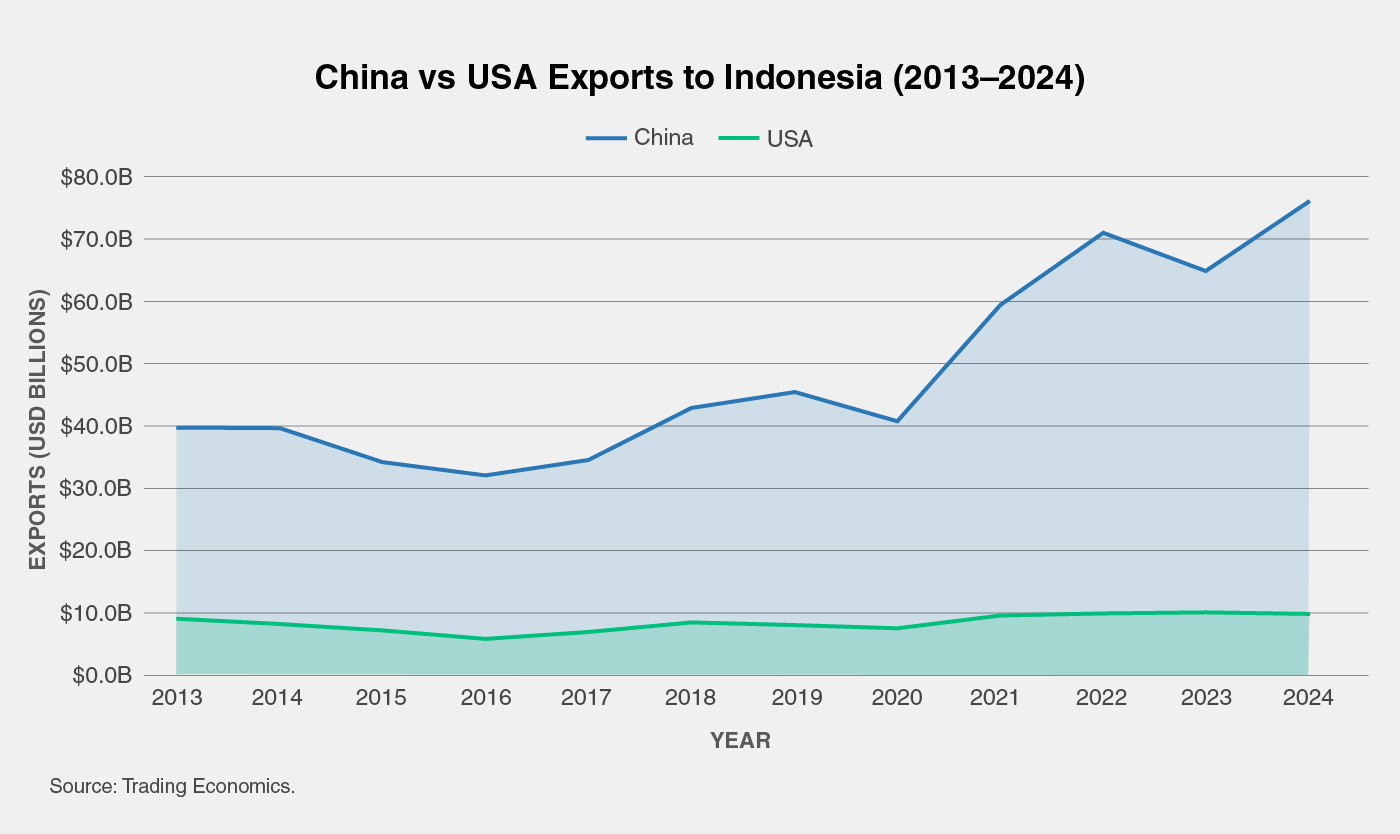
Trade between the two nations has also deepened. In 2024, China exported $76.8 billion in goods to Indonesia, primarily machinery and manufactured products, while importing $71 billion, largely mineral fuels and other raw materials. In comparison, the US exported roughly $10 billion in goods to Indonesia and imported $29.5 billion, underscoring China’s dominant role as Indonesia’s leading trading partner.
Indonesia has maintained strategic caution even with deepening economic ties. For much of the last decade, Jakarta remained firm against Beijing’s claims in the South China Sea, particularly with the “nine-dash line” that overlaps with parts of Indonesia’s Exclusive Economic Zone near the Natuna Islands. Indonesia established new military infrastructure on the islands as a deterrent. Recently, Indonesia’s rhetoric has softened. The 2024 maritime trade agreement with China signalled a shift, with Indonesian officials emphasising that the nine-dash line doesn’t impede on Indonesian sovereignty.
Looking at the defence sector, Indonesia has diversified its sources for technology and weaponry. Between 2014 and 2023, it received 149 military systems from China, including missiles, drones, and radar technology. A notable development came in 2025, when Jakarta announced that it would make its first non-Western aircraft deal with the purchase of 45 fighter jets from China. This move reflects diversification rather than complete realignment; Indonesia continues to maintain close military ties with Western partners, with the US supplying Indonesia with nearly two dozen orders including missiles, aircraft, and other military technologies since 2014.
Overall, Indonesia’s approach illustrates the balancing act of a middle power: leveraging China’s economic opportunities while preserving strategic independence.
Saudi Arabia’s evolving partnership with China stems from a convergence of long-term development goals. Riyadh’s Vision 2030 plan aims to diversify the economy away from oil dependence and modernise national infrastructure. China’s Belt and Road Initiative (BRI) complements these objectives, offering investment capital, construction expertise, and access to new technology.
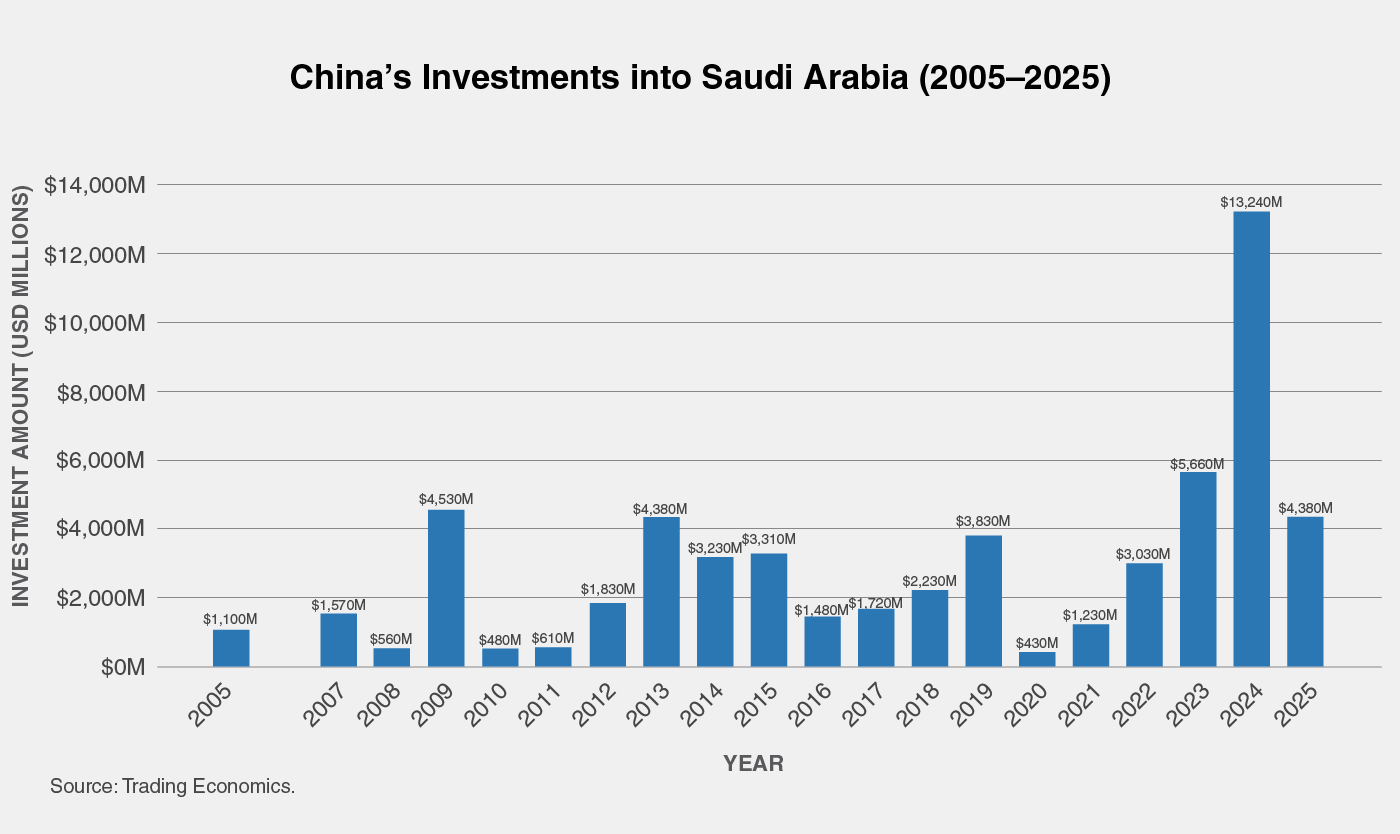
Over the past two decades, Chinese state-owned enterprises have invested $60 billion in Saudi Arabia. The two largest sectors have been energy and real estate, with a growing emphasis on renewable power. PowerChina has undertaken multiple large-scale projects, including three major wind farms, while China Energy has committed more than $4.6 billion to solar developments. These projects align with both nations’ energy transition strategies: China seeking secure energy partners, and Saudi Arabia positioning itself as a hub for clean-energy investment.
This growing cooperation extends beyond economics.
At the United Nations General Assembly, Saudi Arabia’s voting patterns have increasingly paralleled those of China. Out of 30 sampled resolutions, Riyadh’s votes matched Beijing’s 22 times, compared with only three alignments with the US. One of those agreements with China was the 2019 UN statement supporting Beijing’s position on its policies toward Uyghurs in Xinjiang, illustrating an emerging political solidarity, or at least diplomatic pragmatism.
Yet Saudi Arabia’s defence ties with the US remain deeply rooted. Between 2016 and 2020, Riyadh sourced most of its advanced weaponry from Washington, including major purchases of guided munitions. It hosts five US military bases and no Chinese installations, underscoring where its security dependencies still lie. The kingdom’s approach can be described as selective diversification, broadening its partnerships to serve economic and diplomatic goals without undermining its traditional security alliance.
Through this strategy, Saudi Arabia improves its leverage with both superpowers while advancing its domestic reform agenda. The result is a carefully calibrated relationship: economically and diplomatically closer to Beijing yet militarily anchored to Washington.
Indonesia and Saudi Arabia reflect complementary forms of middle-power engagement with China. Both are deepening economic and political cooperation, yet neither has fully realigned its strategic loyalties. Instead, they are employing issue-based partnerships—collaborating where interests converge while maintaining flexibility elsewhere.
This pattern underscores the changing nature of global influence. China’s approach –combining foreign direct investment, infrastructure financing, and soft-power diplomacy – has expanded its footprint in regions historically shaped by Western economic and security networks. Middle powers, for their part, are not passive recipients of this influence. They are using engagement with China to secure growth, diversify partnerships, and strengthen their own international profiles.
The challenge for these countries lies in maintaining autonomy amid intensifying great-power competition. For Indonesia, the risk is over-reliance and dependency on Chinese investment in strategic industries. For Saudi Arabia, it is ensuring that growing economic and diplomatic proximity to Beijing does not create friction with Western defence partners. Both must balance the benefits of diversification against the potential costs of dependence.
China’s engagement with Indonesia and Saudi Arabia demonstrates how influence can be built through investment and soft power rather than with military force alone. It also shows that middle powers have growing agency. Their choices don’t have to be immovable but can be adaptive, reflecting national priorities, domestic reforms, and regional contexts.
As global competition between major powers continues, the behaviour of middle powers like Indonesia and Saudi Arabia will play a critical role. In this emerging landscape, power is no longer concentrated in a few capitals but distributed among many countries navigating the complex intersections of economy, security, and diplomacy.
Further reading:
Canadian PM Mark Carney's Davos Speech Aligns with New IEP Report on Middle Power Emergence.
A new report from IEP reveals middle power influence - led by the UAE, Türkiye and Indonesia – is rising, as superpower reach has...
The rise of Middle Powers in a fractured international order
Identifying and measuring the factors that drive peace