Canadian PM Mark Carney's Davos Speech Aligns with New IEP Report on Middle Power Emergence.
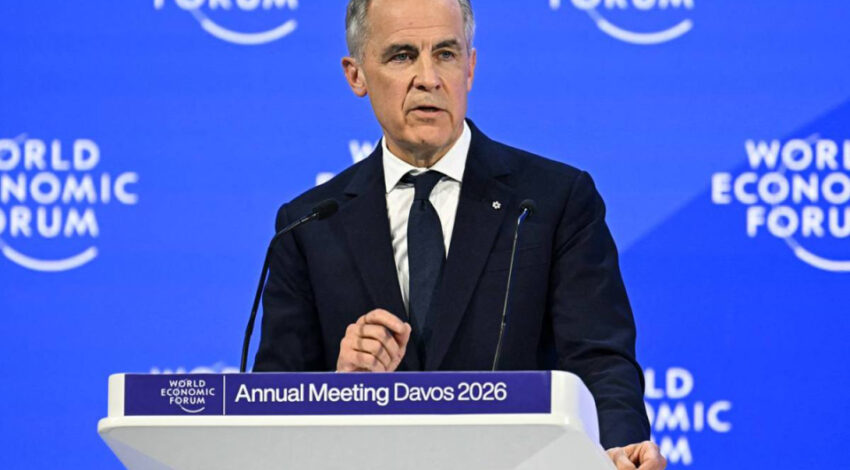
Canadian Prime Minister Mark Carney’s address at Davos on Tuesday outlined a frank assessment of the international order, declaring that the world is experiencing “a rupture, not a transition” and calling on middle powers to chart independent courses rather than rely on traditional great power frameworks.
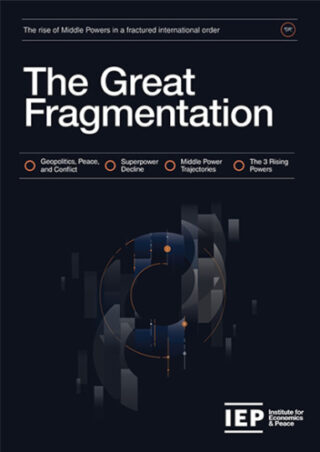
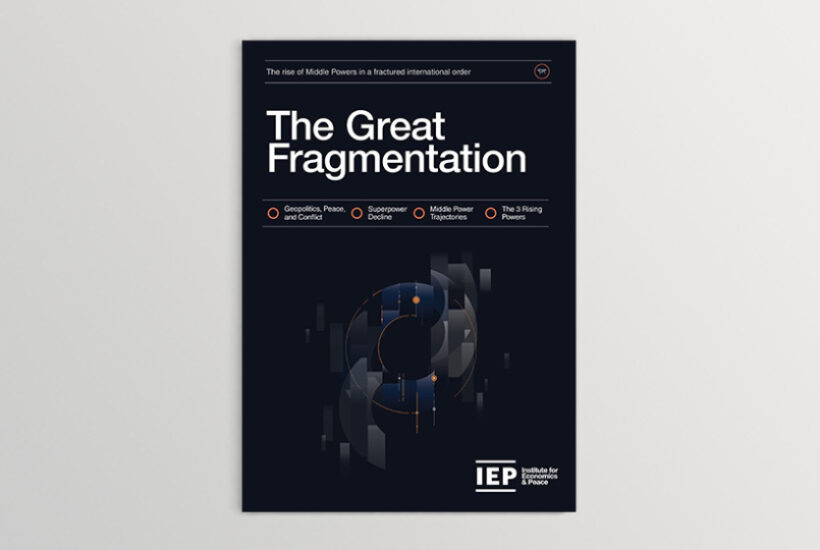
Carney’s characterisation aligns closely with findings from a new Institute for Economics & Peace report titled “The Great Fragmentation: The Rise of Middle Powers in a Fractured International Order,” which documents structural shifts in the global system.
Drawing on Václav Havel’s essay “The Power of the Powerless,” Carney compared the current international system to one sustained by collective pretence, where countries publicly commit to rules they observe being selectively enforced. He argued this arrangement worked when American hegemony provided public goods such as secure sea lanes and stable financial frameworks, but suggested that “bargain no longer works.”
IEP’s ‘The Great Fragmentation’ report indicates that fragmentation across financial, political, trade, and mobility dimensions now exceeds Cold War levels. The report shows that trade as a percentage of GDP has plateaued, trade-restrictive measures have tripled since 2019, and multilateral institutions face sustained challenges.
Carney addressed the limits of superpower influence, challenging the assumption that compliance with great power demands ensures security for smaller nations. He argued that middle powers possess meaningful strategic options.
IEP’s research documents that since 2015, neither the United States nor China has substantially expanded its sphere of influence. The report notes:
The research characterises this as a plateau in superpower influence expansion rather than absolute decline.
IEP’s report documents the number of middle power nations nearly doubling from nine in 1991 to 16 today. The combined material capacity of middle powers now exceeds that of great powers, according to the analysis.
Carney announced 12 new Canadian trade and security agreements across four continents concluded in six months, describing a strategy of “variable geometry” – flexible coalitions based on shared interests rather than fixed bloc alignment. This approach mirrors hedging behavior IEP identifies among middle powers globally.
The report cites findings including:
These nations maintain relationships with both Washington and Beijing while building strategic autonomy.
IEP data shows internationalised intrastate conflicts nearly tripled since 2010, with middle powers increasingly involved as arms suppliers or financial backers. Sudan’s civil war illustrates this pattern, with interventions from multiple middle powers complicating the conflict. However, middle power positioning between rival camps can also enable mediation roles, as demonstrated by Türkiye’s facilitation of the Black Sea grain deal.
Carney concluded by stating “it is time for companies and countries to take their signs down,” arguing the previous international order will not return.
IEP characterises the fragmentation as a structural shift rather than temporary disruption, noting that how middle powers utilise growing influence will shape whether fragmentation deepens or new cooperative frameworks emerge.
Download: The Great Fragmentation: The Rise of Middle Powers in a Fractured International Order
Rising conflict deaths, accelerating geopolitical tensions, and middle power assertiveness are driving ‘The Great Fragmentation’ – a...
The demand for rising defence budgets across NATO has sparked calls to brand arms spending as eligible for inclusion under ESG criteria. Proponents...
The rise of Middle Powers in a fractured international order
Identifying and measuring the factors that drive peace