The UAE’s ability to act decisively, mobilise resources quickly and implement long-term strategies has amplified its international standing.
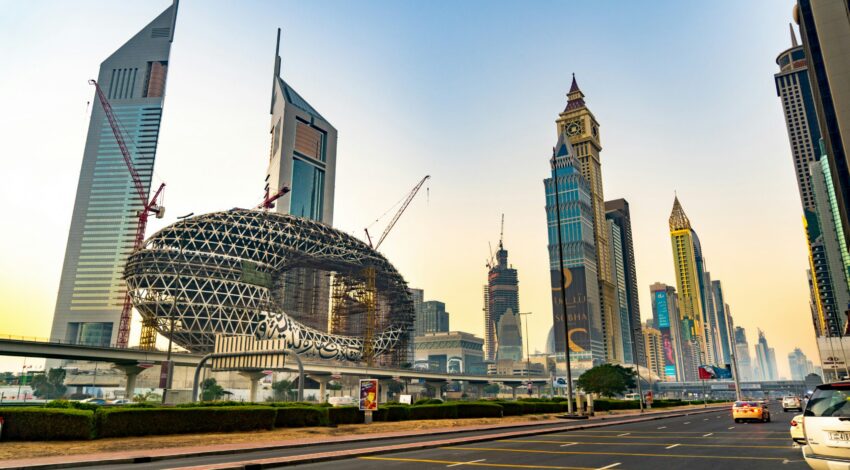
Despite its relatively small population, the UAE has emerged as one of the most influential middle powers in the world, leveraging economic diversification, diplomatic activism and strategic investment to expand its global footprint well beyond its geographic size.
They are a key player in the transformation of the global balance of power. The post–Cold War era, once defined by the dominance of a small number of superpowers and a relatively cohesive international system, is giving way to a far more fragmented order. Influence is increasingly dispersed across a growing group of middle powers whose economic capacity, diplomatic reach and strategic autonomy now shape global outcomes.
This shift is the central finding of the Institute for Economics & Peace’s report The Great Fragmentation: The Rise of Middle Powers in a Fractured International Order. The Great Fragmentation identifies a key structural change in the international system: while the United States and China remain the world’s most powerful states, their relative influence has stabilised, while middle powers have expanded both individually and collectively. These countries increasingly shape trade networks, regional security arrangements, investment flows and diplomatic coalitions. The UAE exemplifies how influence is no longer determined solely by population size or military strength, but by connectivity, adaptability and strategic positioning.
Over the past two decades, the UAE has transformed itself from a hydrocarbon-dependent economy into a diversified global hub for trade, finance, logistics and technology. Dubai and Abu Dhabi function as critical nodes linking Europe, Asia and Africa, facilitating capital flows, transport routes and commercial networks across regions. In an era of economic fragmentation and supply-chain realignment, such connectivity has become a powerful source of influence.
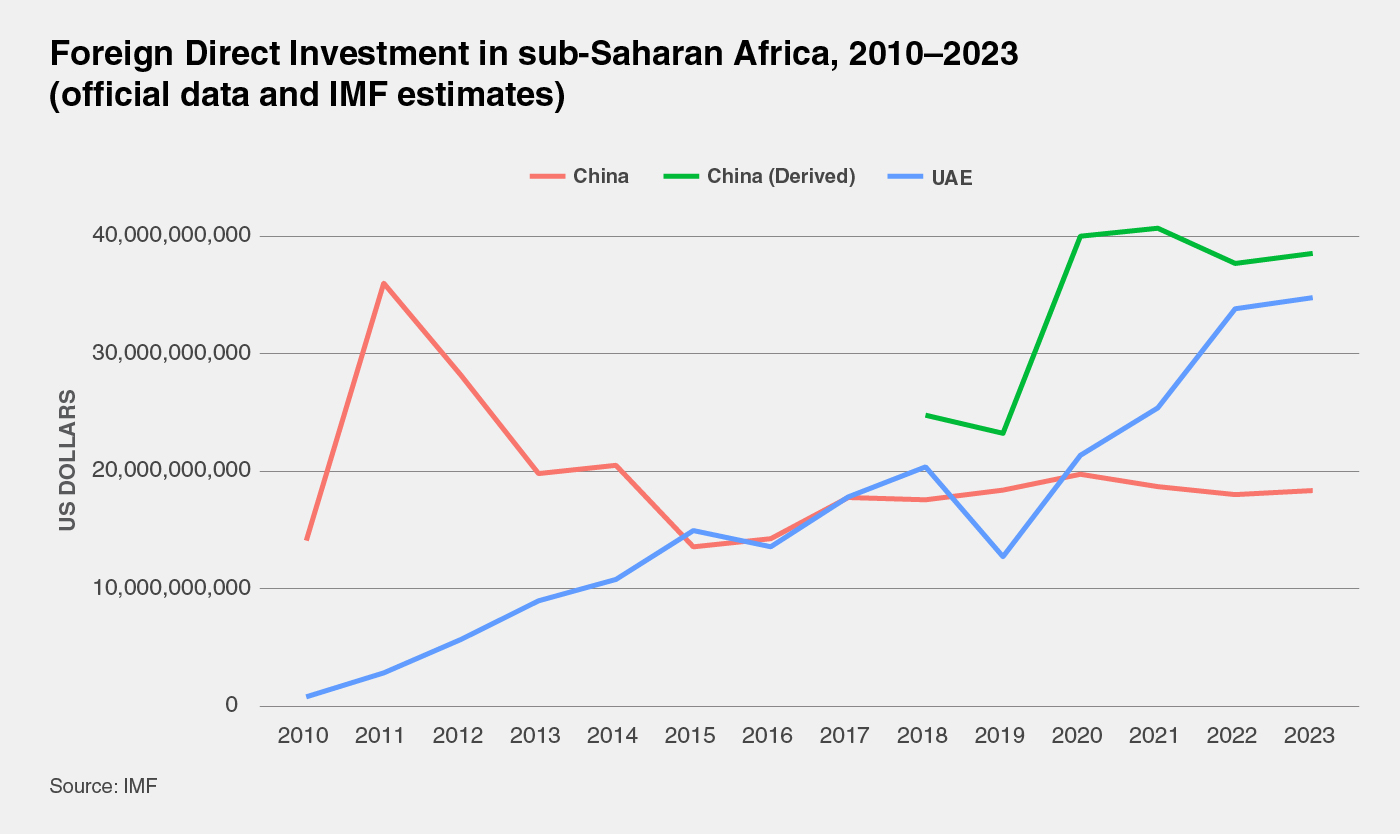
The UAE’s strategic investments across ports, logistics and infrastructure, spanning Africa, South Asia and the Mediterranean, have further extended its reach. These investments are not purely commercial; they enhance diplomatic relationships, deepen economic interdependence and embed the UAE within emerging trade corridors. As The Great Fragmentation notes, middle powers increasingly derive influence from shaping economic ecosystems rather than dominating them.
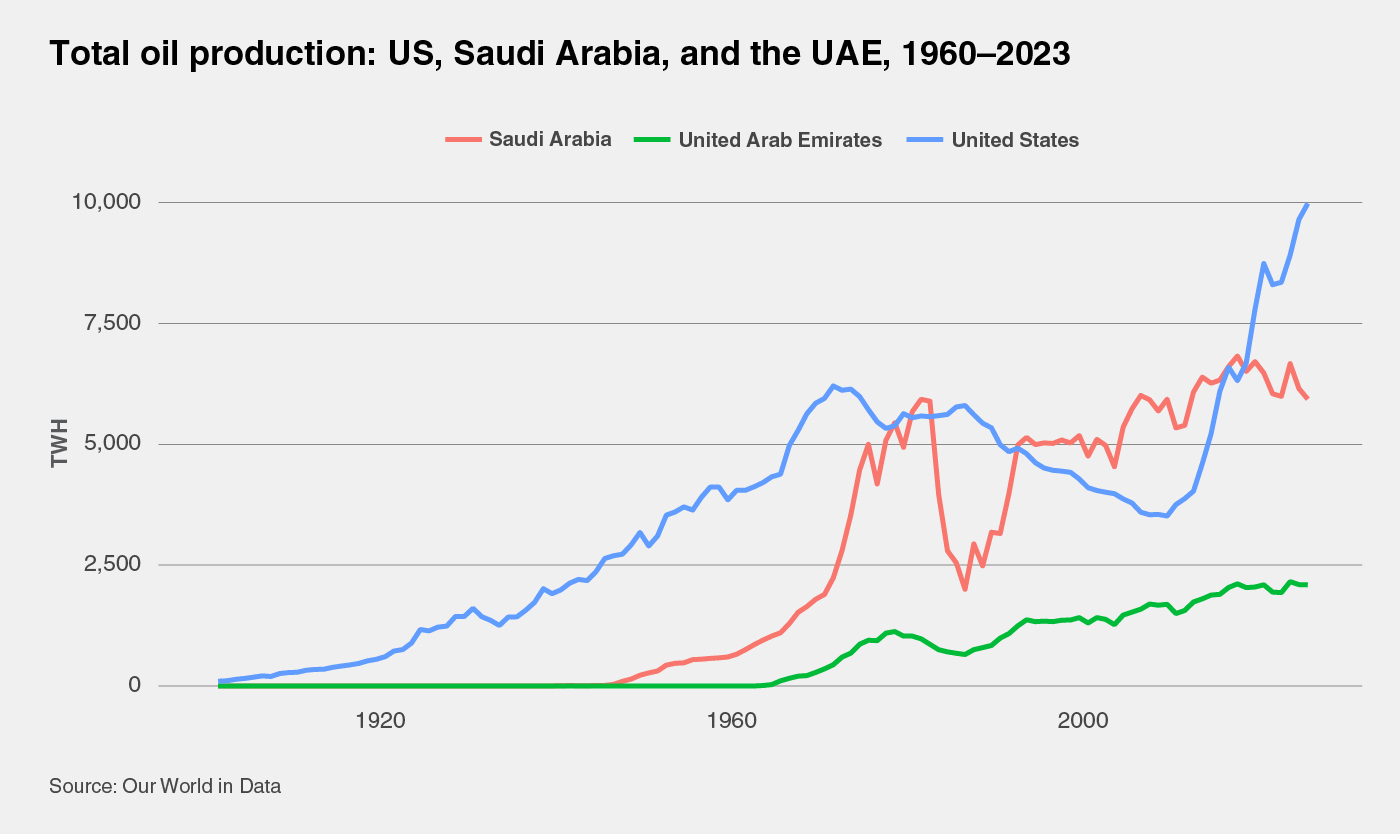
Energy remains central to the UAE’s role, but its function has evolved. While hydrocarbons continue to underpin national wealth, the UAE has positioned itself as a leading actor in energy transition diplomacy. Major investments in renewable energy, both domestically and internationally, alongside its hosting of global climate forums, reflect a strategic effort to remain influential as the global energy system changes.
This dual positioning, as both a major energy producer and a clean-energy investor, allows the UAE to engage credibly across divergent global priorities. In a fragmented world where climate policy, energy security and economic development often pull in different directions, such flexibility enhances diplomatic relevance.
The UAE’s foreign policy has become increasingly activist. Over the past decade, it has expanded its diplomatic presence, deepened partnerships across the Middle East, Africa and Asia, and played an active role in regional mediation efforts. This approach reflects a broader middle-power pattern identified by IEP: the pursuit of influence through proactive diplomacy rather than alignment with a single power bloc.
Unlike traditional allies embedded firmly within Western or non-Western camps, the UAE maintains relationships across geopolitical divides. It engages closely with the US and Europe while simultaneously expanding ties with China, India, Russia and emerging economies. This multidirectional diplomacy mirrors the hedging strategies increasingly adopted by middle powers seeking autonomy in a polarised environment.
Security considerations have also shaped the UAE’s global role. While it has reduced its direct military involvement in recent years, it continues to prioritise defence capability, regional security partnerships and counterterrorism cooperation. These efforts are framed less as power projection and more as stability management – a distinction increasingly common among middle powers operating in volatile regions.
The UAE’s approach reflects the changing nature of influence in the fragmented order. Rather than seeking dominance, it aims to shape outcomes through presence, partnerships and mediation. This strategy is evident in its role in regional reconciliation efforts, humanitarian engagement, and support for conflict de-escalation initiatives.
At the same time, the expansion of influence carries risks. The Global Peace Index identifies that external conflict involvement and regional instability can undermine long-term peacefulness. For middle powers, balancing ambition with restraint is a persistent challenge. The UAE’s recent recalibration toward diplomacy and economic engagement reflects an awareness of these constraints.
Domestic foundations have been central to sustaining the UAE’s international role. High levels of state capacity, long-term planning, and investment in human capital have enabled continuity in foreign policy. The IEP framework emphasises that internal resilience, via effective governance, economic stability and social cohesion, is critical for maintaining influence in an increasingly volatile global system.
The UAE’s ability to act decisively, mobilise resources quickly and implement long-term strategies has amplified its standing among peers. The UAE’s influence is likely to remain closely tied to its role as a global connector. As trade patterns shift, capital flows diversify and geopolitical blocs harden, countries able to operate across divides will become increasingly valuable. The UAE’s success has been built on this capacity.
Intensifying great-power competition, regional instability and climate risks will test the sustainability of its model. Navigating these pressures will require continued adaptability, which has become a trait of successful middle powers.
The UAE’s trajectory reflects the core argument of The Great Fragmentation. Power in the modern world is not disappearing from great powers, but it is no longer monopolised by them. Influence increasingly flows through networks, hubs and strategic intermediaries. In this environment, the UAE has emerged as one of the most effective middle powers, shaping outcomes not through size or coercion, but through connectivity, diversification and strategic foresight.
Further reading:
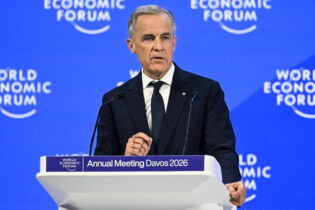
Canadian PM Mark Carney's Davos Speech Aligns with New IEP Report on Middle Power Emergence.
A new report from IEP reveals middle power influence - led by the UAE, Türkiye and Indonesia – is rising, as superpower reach has...
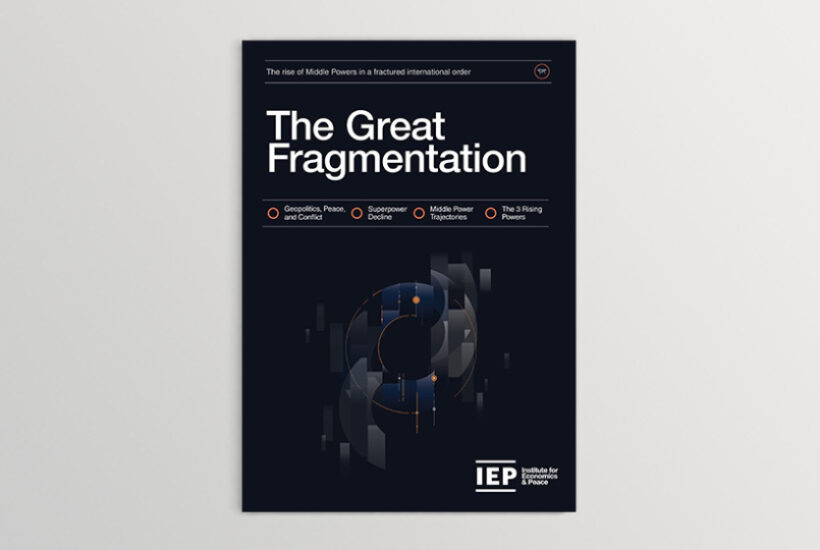
The rise of Middle Powers in a fractured international order
Identifying and measuring the factors that drive peace