On the Global Links 4 Peace program, Sip Study Shlama, and why the most powerful inclusion work happens when communities lead their own change
It was 2006, three years into the war in Iraq. I was attending a peacebuilding training for youth. I don’t remember every session. But I remember the feeling — the way something shifted when young people who had grown up inside a conflict were given space to imagine what they wanted to build instead.
That training changed my life. It’s why I ended up working in the humanitarian field for the last decade.
I thought about that room a lot last year.
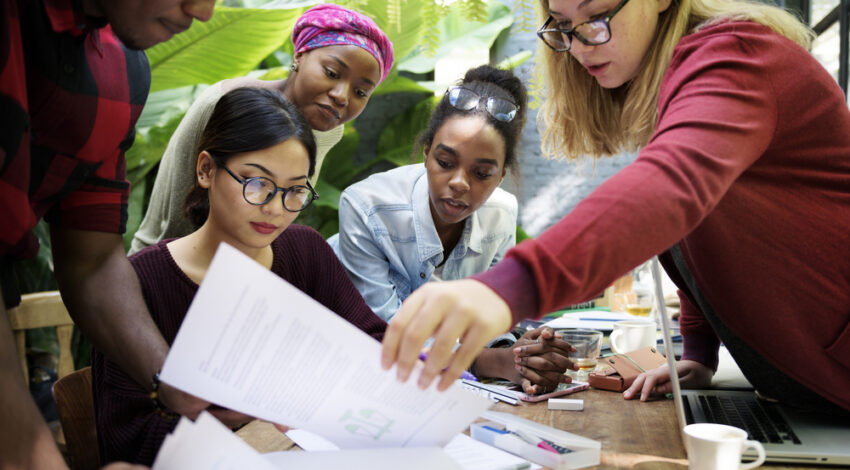
We were at the pitch day for the Global Links 4 Peace program. A cohort of young people from displacement-affected communities in Western Sydney, presenting projects they had designed themselves.
One of them stood up. He wasn’t reading from notes. He was using storytelling — the same techniques we’d worked on together — to bring a room full of people into his vision.
He talked about a community where different generations come together. Where there is joy, not isolation. His group had gone out and surveyed their community, collected real data on what mattered most. Gambling kept coming up. Young people with nowhere safe to go.
So he described a dream. A space to meet, connect, and play. Built from within the community, for the community.
Every person in that room was with him.
I remember thinking: the work is done. Not because the program had ended. Because something had transferred.
That moment is what I mean when I talk about antifragility.
Nassim Nicholas Taleb introduced antifragility to describe systems that don’t just recover from stress — they grow stronger because of it. A rubber band is resilient. A muscle is antifragile.
Most inclusion programs are built around resilience. They ask: how do we help marginalised people survive in our systems?
It’s a generous question. But it starts in the wrong place.
In my research with communities affected by forced displacement, something kept surfacing that resilience couldn’t account for. People weren’t just bouncing back. They were adapting, reading rooms, navigating bias, building trust across cultural difference.
I started calling it lived expertise. Not background. Not context. Expertise — strategic, relational, and cultural — forged through the experience of displacement and the daily practice of navigating systems not designed for you.
Antifragility asks a different question. Not: how do we help people survive our systems? But: how do we build systems that are stronger because of the people in them?
That shift changes everything.
Global Links 4 Peace brought together the Institute for Economics & Peace, Shayna Humanitarian Services , and Unbound Stories — made possible through the Cohesive Communities COMPACT grant funded by Multicultural NSW.
The partnership worked because each organisation brought something distinct.
The Institute for Economics and Peace delivered their Positive Peace Framework training — a rigorous, evidence-based lens for understanding community cohesion and social change. Unbound Stories led the Cultural Safety training and the COMPASSionate Storytelling Model, and provided mentorship throughout the project design phase.
Together, we worked with 25 young people aged 18 to 30. The premise was simple and radical: they already had the most important skills. Our job was to give them frameworks to channel what they already knew.
Sip Study Shlama wasn’t written into a proposal. It emerged from within the cohort itself.
A community-led initiative created by program participants, it builds safe spaces for young people to study, connect, and develop their leadership skills. It was the gambling data. The dream space. The vision of cross-generational joy in a community that had been told it didn’t have anywhere to belong.
Unbound Stories is proud to be their ongoing partner.
What I saw in that pitch room was the same enthusiasm I first witnessed in Baghdad twenty years ago. The same thing that happens when young people are given the conditions to imagine, not just survive.
The young man in that room didn’t learn storytelling so institutions would feel good about funding him. He learned because storytelling is how humans share information, build trust, and move people toward a shared vision.
That’s not a soft skill. That’s power.
When organisations invest in inclusion, the question worth asking is not whether we are helping marginalised people adapt to us. It’s whether we are creating the conditions for the people with the most relevant expertise to lead.
Antifragility isn’t a program outcome you can measure in a survey. It shows up months later, in what people build when they leave the room.
Are your inclusion programs building resilience in people, or antifragility in systems?
The answer changes everything about what you design next.
This article by Samah Shda was originally published on LinkedIn and is republished here with permission.
Youth radicalisation has become a defining feature of the contemporary terrorism landscape, emerging alongside a broader shift in the nature and...
Assessment of the current state of the Iran conflict through the lens of terrorism and the...