New IEP and UNDP research finds that SME lending risks in developing countries are routinely overstated, offering a more accurate risk assessment framework that could enable fairer pricing and greater impact investment.
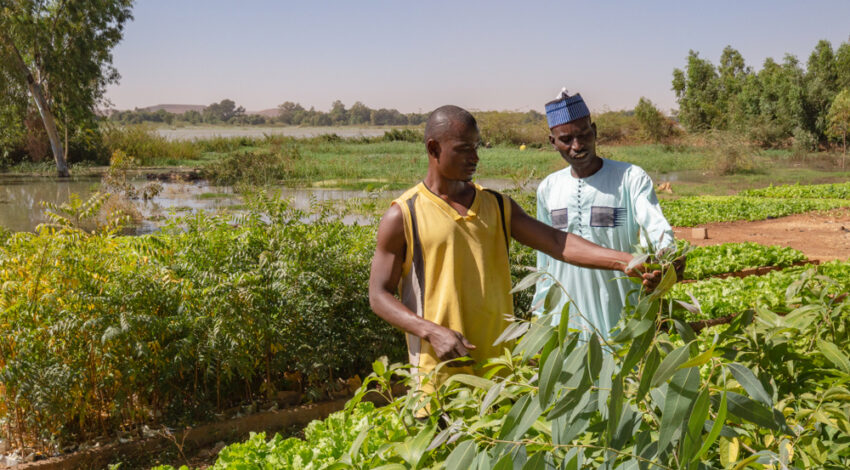
A small manufacturer in Nairobi and one in Frankfurt can be equally well run and equally likely to repay yet face significantly different borrowing costs. The Kenyan firm might pay 18 to 20 per cent a year; its German counterpart a fraction of that. Some of that gap is real. But much of it comes not from how these businesses perform, but from how investors measure the risk of lending to them.
For impact investors, whose purpose is to put capital where it does the most good, that measurement problem is an expensive one.
A recent research initiative by the Institute for Economics & Peace and the UN Development Programme (UNDP), with support from various universities, sets out a more careful way to do that measurement, and finds that the risk is routinely overstated.1 It rests on three ideas.
The first concerns country risk: the extra charge added simply because a business sits in, say, Kenya rather than Germany. The usual way to size this borrows from the market price of insuring against a government defaulting on its debt, the Credit Default Swap’s price.2 The trouble is that this price blends two very different things: the genuine chance of default, and a “fear” premium that rises and falls with global investor mood, for reasons unrelated to the country itself.
Using an established financial technique, the researchers pull the two apart.3, 4 On average, around 40 per cent of a country’s CDS price turns out to be sentiment rather than substance. Strip that out, and the default risk measure shrinks considerably.
The second idea tackles the risk attached to the individual business. Because most small firms in developing countries have no credit rating and no audited accounts, lenders fall back on rules of thumb, often tacking on an arbitrary 3 or 4 percentage points to be safe.
The researchers replace guesswork with evidence, drawing on an International Finance Corporation database recording how more than 59,000 loans to private firms across 169 countries actually performed over three decades.5 The record is reassuring: firms in these markets default far less often, and recover far more when they do, than the assumptions suggest. Measured against real experience, the firm-level charge falls too.
The third idea addresses a fundamental asymmetry in how risk is priced. When information about an individual SME is limited, uncertainty is typically treated as additional risk and converted into a higher interest rate. Yet the potential risk-reducing value created by that same business, through employment, economic diversification, stronger local supply chains, greater climate adaptation and community stability, is rarely assessed or reflected in the price of the loan.
In other words, uncertainty is routinely penalised, while resilience is seldom rewarded.
Building on an OECD resilience framework, the model assesses how much a business strengthens these foundations across six areas, giving greater weight to contributions more closely associated with lower default risk.6 That relationship is not merely assumed: when the project evaluated a lending-and-training programme in fragile, conflict-affected settings, borrowers’ creditworthiness improved for seven in ten participants, rising more than 10 per cent on average. The resulting resilience score is translated into a modest discount, helping to correct a pricing imbalance that is particularly consequential for impact SMEs in developing countries.
Bring these together and the effect is large. For a typical small business in Kenya, the conventional method gives an estimated cost of debt of about 19.9 per cent. Applying the refined country and firm measures brings it down to roughly 15.3 per cent, and the resilience discount trims it further to 11.7 per cent.1 That is more than eight percentage points, achieved not by ignoring risk but by measuring it honestly.
For impact investors the implication is threefold.
None of this asks investors to be charitable. It asks them to be accurate.
Notes
Applying IEP's refined risk framework to a typical small business in Kenya lowers the estimated cost of debt from about 19.9 per cent under conventional methods to 11.7 per cent, a reduction of more than eight percentage points. Refined country and firm-level risk measures bring the rate to roughly 15.3 per cent, and a resilience discount reduces it further to 11.7 per cent.¹
Part of the gap reflects genuine differences in risk, but much of it comes from how investors measure that risk rather than how the businesses actually perform. Country risk premiums are often based on sovereign Credit Default Swap prices, which blend real default risk with a sentiment-driven 'fear' premium unrelated to the business itself; on average, around 40 per cent of a country's CDS price reflects sentiment rather than substance. Firm-level risk is often estimated using arbitrary rules of thumb, such as adding three or four percentage points 'to be safe', rather than actual default data.
The framework separates the genuine probability of a country defaulting from investor sentiment embedded in sovereign Credit Default Swap prices, grounds firm-level risk in actual loan performance data from an International Finance Corporation database covering more than 59,000 loans across 169 countries over three decades, and applies a resilience discount reflecting a business's contribution to community and economic resilience across six OECD-based dimensions.¹ Together, refining these three measures substantially lowers estimated default risk compared with conventional methods.
When IEP evaluated a lending-and-training programme for SMEs in fragile, conflict-affected settings, creditworthiness improved for seven in ten participants, rising by more than 10 per cent on average. This finding supports translating a resilience score, covering factors such as employment, economic diversification, supply chain strength, climate adaptation and community stability, into a discount on the cost of debt.
It implies three things: more SMEs and markets in the developing world are 'bankable' than conventional risk measures suggest, capital that ignores a business's resilience contribution may earn an extractive return rather than the intended impact, and mis-priced risk may itself weaken the local systems investors want to strengthen. IEP's researchers frame accurate risk measurement, not charitable lending, as the fix.¹

Identifying and measuring the factors that drive peace
Analysing the factors that sustain peace.