As rivers run dry across Germany, Romania, and Hungary, and wildfires in Europe have caused an estimated US$3.6 billion in economic losses in just two months, bankers are analysing the potential economic impact from the degradation of ecosystems.
Warnings about ecological collapse used to come mostly from environmental groups and independent researchers. They are now coming from central banks.
The European Central Bank (ECB) is among the latest and most consequential to raise the alarm. Frank Elderson, a member of the ECB’s executive board, said that the destruction of nature and the escalation of extreme weather pose a growing risk to the stability of the global financial system, a conclusion that lines up closely with years of independent tracking by think tanks such as IEP.
Elderson said that the eurozone’s central bank is stepping up its monitoring of the financial risks linked to the loss of ‘ecosystem services’, the natural processes, such as clean water, stable rainfall, and functioning river systems, that underpin economic activity.
‘These services are not stable, but they are in rapid decline,’ Elderson said. ‘That is why we talk about the climate and nature crises.’
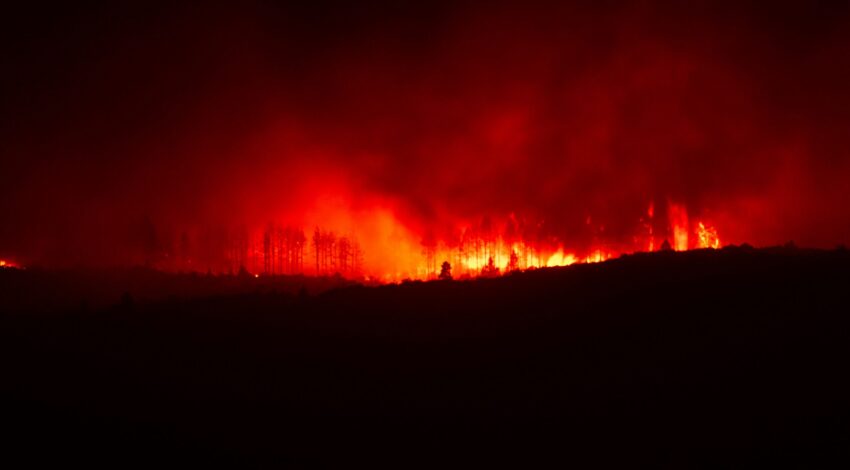
Wildfires in France, Spain, Greece, Portugal, and Romania, amid record-breaking heat, are an emergency that Elderson said illustrates exactly the kind of risk the ECB is trying to price.
‘Nature-related risks can pose material economic and financial risks, including through their impacts on credit risk, growth, inflation, and, over the long-term, potential financial instability,’ he said.
The ECB, as supervisor of Europe’s largest banks, plans to publish analysis later in 2026 examining how the degradation of ecosystems could translate into credit losses across the eurozone banking system.
Elderson was a founding figure behind the Network for Greening the Financial System (NGFS), a group of 114 central banks and financial supervisors set up in 2017 to develop climate risk management tools. The United States withdrew from the NGFS in 2025, leaving Europe to lead the work largely on its own. Elderson said the banking industry remains convinced the risk is real.
‘I would think it is very difficult to find a bank in Europe that will honestly tell you that they think this is not relevant,’ he said. ‘I think that time has passed.’
The data arriving this northern summer supports his case. June 2026 was the hottest June on record for western Europe, according to the EU’s Copernicus Climate Change Service, and the second-warmest June ever recorded globally, at 1.39 degrees Celsius above the pre-industrial average. Sea surface temperatures for the world’s ice-free oceans were the highest ever measured for the month, narrowly exceeding the previous record set in 2024.
The heat has carried a direct human cost. Germany’s Robert Koch Institute has recorded 5,120 heat-related deaths since the start of 2026, while roughly 1,300 deaths across Europe have been attributed to the run of heatwaves in recent months. Wildfires in France, Spain, Portugal, Greece, and Romania have burned close to 300,000 acres and caused an estimated US$3.6 billion in economic losses in the first two months of the 2026 fire season alone, according to Financial Times figures based on the French government’s own assessment methodology.
Nowhere is the link between climate and economic disruption clearer than on the continent’s major rivers.
Severe drought across Western and Central Europe has left the Upper Rhine barely navigable, restricting barge loadings on that stretch to as little as 10 per cent of capacity and pushing freight rates to record highs, while the Danube has fallen to around 10 centimetres in Budapest, well below the previous all-time low of 33 centimetres set in 2018. The low Danube levels have also forced a partial shutdown at Hungary’s Paks Nuclear Power Plant just as summer electricity demand peaks.
On 30 July, the Rhine reached its lowest water level ever recorded at the Dutch border, 6.47 metres above the Normal Amsterdam Level, edging past the previous record set in August 2022. Water discharge fell to 692 cubic metres per second, well under 40 per cent of the roughly 1,900 cubic metres per second typical for the season.
The cause is a combination of two effects: alpine snowpack and glaciers that normally feed the Rhine through summer melted out months early, while drought across the German and French catchment areas has prevented any replenishment. The economic consequences followed quickly. Freight rates from Rotterdam rose from US$52 per tonne in June to close to US$173 per tonne as barges further downstream were forced to operate at 20 to 30 per cent of their normal carrying capacity, splitting cargo across additional vessels. Germany’s Kiel Institute has warned the bottleneck could cut national economic output by 0.2 per cent. At the critical Kaub gauge further upstream, water levels dropped to 27 centimetres, with forecasts pointing to a new record low of 24 centimetres.
The Danube has been under similar strain. Water flow through Romania dropped to 1,500 cubic metres per second, prompting the Romanian navy to carry out controlled explosions near the Bala Canal to clear rock and keep the channel open. Romania placed its energy sector on state alert and took a reactor unit offline at the Cernavodă nuclear plant, while the acting prime minister asked residents to cut electricity use during peak hours. In Hungary, one of the two generating units at the Paks Nuclear Power Plant was shut down as cooling water ran short, the first time the facility had faced a complete shutdown in 44 years, before river levels stabilised enough to keep the last turbine running. Serbia cut output at its Djerdap I and II hydroelectric plants, which normally supply around 18 per cent of the country’s electricity, to 20 to 30 per cent of capacity.
None of this is confined to shipping companies and utilities. Lower river flows raise water temperatures, which reduces the cooling capacity available to nuclear and thermal power plants across the continent, tightening electricity supply during the very heatwaves that are driving up demand for air conditioning.
The Institute for Economics & Peace (IEP) tracks these pressures at a global scale through its Ecological Threat Report (ETR), which in its 2025 edition assessed 3,125 sub-national areas across 172 countries. It found that global ecological threat levels rose by 0.8 per cent between 2019 and 2024, deteriorating in 96 countries and improving in 74.
Water risk sits at the centre of that trend. Per capita freshwater availability has fallen from around 18,000 cubic metres in 1950 to just over 5,000 cubic metres today, and close to 1.9 billion people now live in areas of high, or very high, water risk. Twenty-one of the world’s 37 major aquifers are being depleted faster than they can naturally recharge. The report also found that Western and Central Europe recorded the largest improvement in water risk of any region over the period, partly a recovery from the severe drought conditions of 2019, a reminder that the record lows on the Rhine and Danube this year are a reversal, not a continuation, of that trend.
Food security shows a similar pattern. The number of food-insecure people worldwide rose by more than 300 million between 2019 and 2021 and reached close to 2.3 billion by 2024, with between 638 million and 720 million people experiencing hunger that year. The ETR found that a doubling of food prices is associated with a 13 per cent rise in conflict the following year, a link that runs directly into the inflation and growth channels Elderson described. Natural disasters added to the strain, with 2024 producing 45 million internal displacements, the highest annual figure since at least 2008.
The ETR also found a correlation of 0.58 between its ecological threat scores and the Global Peace Index, rising to 0.67 against the index’s Safety and Security domain. Countries under the greatest ecological strain are, on average, the least peaceful, and the relationship runs in both directions: ecological degradation raises the risk of conflict, while conflict then erodes the institutions and resources needed to manage further ecological strain. IEP’s data shows this is not a fixed trajectory. Lesotho, Rwanda, Eritrea, and Eswatini recorded the largest reductions in ecological threat of any countries assessed, evidence that improvement remains possible even in the most exposed regions.
Behind these events sits a quieter, structural problem: a growing share of climate and nature-related losses are going uninsured. Analysis from the Official Monetary and Financial Institutions Forum puts average annual uninsured losses at US$64 billion in the United States between 2021 and 2024, and around US$68 billion a year in the European Union between 2021 and 2023. Including indirect effects and ecosystem damage, global disaster losses reached an estimated US$2.3 trillion in 2023.
Ecosystem loss compounds the problem in ways that are often overlooked. Forests and wetlands reduce the physical force of floods and storms; their removal can raise flood risk by up to 700 per cent in affected areas. As private insurers withdraw from high-risk regions, governments are increasingly left as the insurer of last resort, absorbing emergency response and reconstruction costs at the same time as disasters reduce their tax revenue.
The return on acting earlier is well documented. Each dollar invested in climate resilience can save up to US$13 in avoided losses, and nature-based flood defences, such as restored wetlands and floodplains, can be up to 25 times more cost-effective than engineered alternatives such as sea walls and levees.
Elderson’s warning, delivered before this year’s wildfires and river records, now reads less like a forecast and more like a description of the present.
‘If you destroy nature, you destroy the core on which our economies depend,’ he said. ‘This is not some kind of flower-power, tree-hugging exercise. This is core economics. This is core financial stability, core price stability.’
The European Central Bank (ECB) supervises the eurozone’s largest banks and has found that the destruction of nature and the increasing frequency of extreme weather affect credit risk, economic growth, and inflation. ECB executive board member Frank Elderson has said these ecological pressures now represent a core financial stability risk, not a peripheral environmental issue.
Ecosystem services are the natural processes, such as clean water, stable rainfall, and functioning river systems, that support economic activity. When these services decline, banks face higher credit losses linked to agriculture, energy, and transport, which is why the ECB is developing tools to measure the risk.
The Rhine reached its lowest recorded level at the Dutch border on 30 July 2026, cutting barge capacity and pushing Rotterdam freight rates from US$52 to close to US$173 per tonne. The Danube fell to a record low in Budapest and forced nuclear and hydroelectric plants in Hungary, Romania, and Serbia to reduce output during peak summer demand.
The insurance protection gap is the difference between economic losses from climate and nature-related disasters and the share covered by insurance. Analysis from the Official Monetary and Financial Institutions Forum puts average annual uninsured losses at US$64 billion in the United States and US$68 billion in the European Union, leaving governments to absorb rising reconstruction costs as private insurers withdraw from high-risk regions.
The Institute for Economics & Peace’s (IEP) Ecological Threat Report 2025 found that global ecological threat levels rose by 0.8 per cent between 2019 and 2024, with nearly 1.9 billion people living in areas of high or very high water risk. The report also found a correlation of 0.58 between ecological threat scores and the Global Peace Index, showing that ecological and economic instability reinforce each other.

Emerging as a pressing ecological challenge, water risk and scarcity are exacerbated by climate change, culminating in increased tensions and the...

With the combination of increased tariffs and reduced aid, some of the world’s most unstable nations risk being pushed even further toward crisis,...
Identifying and measuring the factors that drive peace
Analysing ecological threats, resilience & peace.