Terror groups had been using artificial intelligence mainly as a propaganda tool, useful for generating slick recruitment videos or disinformation. New research suggests AI is now being used across an entire attack chain.
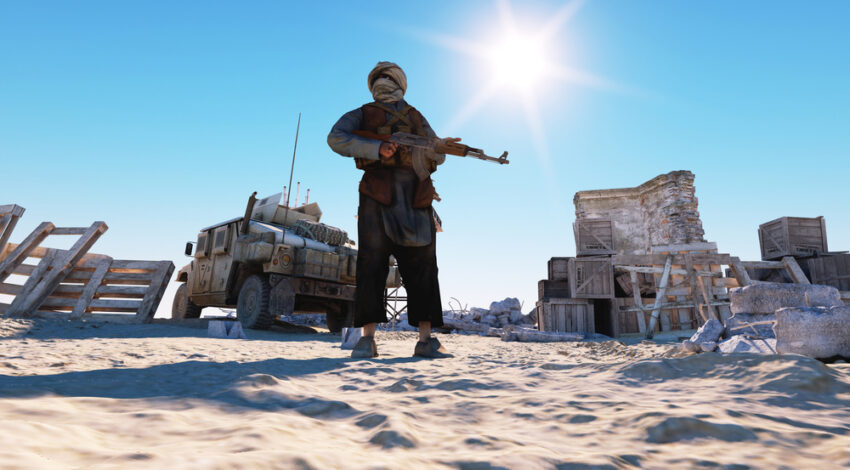
A report from Cambridge University, based on in-depth interviews with dozens of former Boko Haram members, outlines this shift from AI-as-propaganda-tool to AI-as-operational-advisor, documenting how the Nigerian terror group and its offshoot, the Islamic State West Africa Province (ISWAP), have used AI tools since 2023 to sharpen their operational capability.
Fighters described asking AI systems for advice on how to use newly seized weapons, how to improve explosives delivered by drone, and how to plan raids more effectively. One former ISWAP member recalled that AI-assisted analysis taught the group to send smaller, better-coordinated units into battle rather than large numbers of fighters, after early attacks with 200-strong forces resulted in heavy losses. As researchers involved in the study put it, AI is functioning less as a source of new weapons or wholly new forms of terrorism, and more as a force multiplier, improving the efficiency of tactics groups already had.
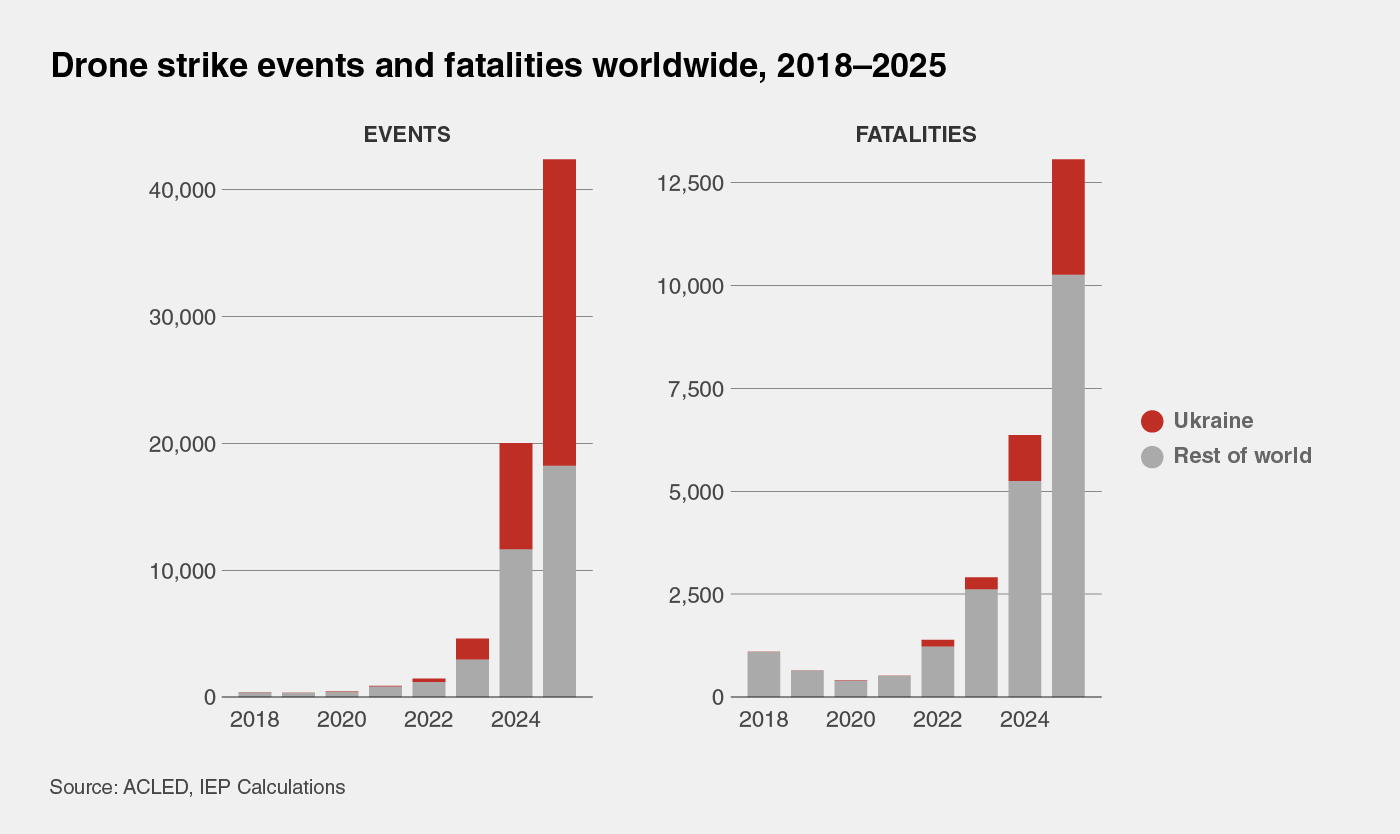
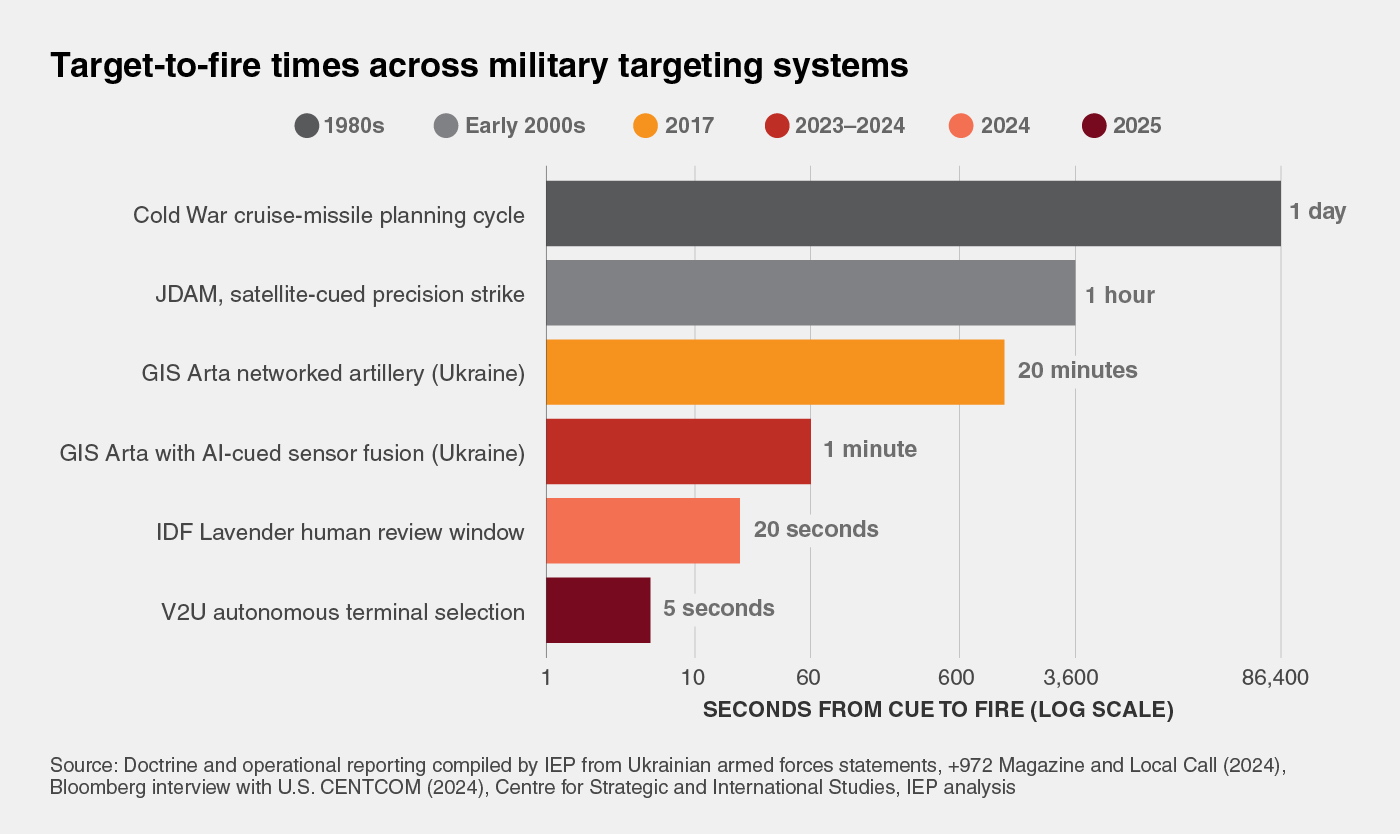
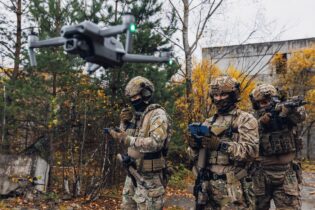
This is consistent with findings from the 2026 Global Peace Index, which identifies the militarisation of artificial intelligence as one of the defining features of contemporary conflict. Recorded drone strike events rose 115-fold between 2018 and 2025, with 565 different armed groups, a category that includes non-state actors and criminal networks alongside militaries, carrying out at least one drone attack in that period. Target-to-fire times enabled by AI have compressed dramatically, from around a day using cruise missile systems in the 1990s to as little as five seconds with autonomous selection systems now in use in conflicts such as Ukraine. The GPI 2026 warns that this speed is arriving well ahead of the international legal and diplomatic frameworks needed to govern it, leaving a widening gap between what the technology can do and what oversight exists to constrain it.
The 2026 Global Terrorism Index records that Nigeria recorded the largest absolute increase in terrorism deaths of any country in 2025, a 46 per cent rise that brought the toll to 750 and returned the country to fourth place globally on the Index. ISWAP drove much of this surge, with attacks jumping from 20 in 2024 to 92 in 2025, resulting in 384 deaths. Together, ISWAP and Boko Haram were responsible for 80 per cent of Nigeria’s terrorism fatalities last year. The GTI 2026 also highlights the cross-border logic that groups like Boko Haram exploit, operating across the tri-border zone of Nigeria, Cameroon and Chad as though national boundaries did not exist, and using the difficult terrain of the Lake Chad Basin to evade security forces. Sixty-four per cent of attacks recorded across Africa in 2025 took place within 100 kilometres of a national border, underlining how porous frontiers compound the security challenge that AI-enhanced tactics now add to.
Also read: Borderlands a focal point of terrorism evolution
Globally, the GPI 2026 shows that AI is reshaping the character of interstate and internationalised conflict, compressing decision cycles and easing the erosion of human oversight in lethal targeting. At the local and insurgent level, the same technology is reportedly helping a designated terrorist organisation refine unit sizes, protect explosive components delivered by drone, and plan raids with greater precision. Neither picture suggests AI is inventing new categories of violence. Both suggest it is making existing violence more efficient, a distinction that matters for how governments and multilateral bodies respond, since the priority becomes governing the technology’s diffusion rather than searching for entirely novel threats.
This also reinforces a structural point about the drivers of terrorism in the Lake Chad Basin and the wider Sahel. Military responses alone have not been sufficient to contain groups like Boko Haram and ISWAP, and the GTI 2026 argues that the absence of basic services, security force abuses and extreme poverty continue to supply a sustainable pool of recruits. If AI tools are now making the tactical side of insurgency more effective, the case for addressing these structural drivers, rather than relying solely on hard security measures, becomes stronger still. A more capable adversary raises the cost of failing to address the conditions that sustain recruitment in the first place.
As the tools driving efficiency gains in modern militaries become more accessible, there is little reason to expect non-state armed groups to be excluded from that diffusion. This has implications for how progress against groups like Boko Haram and ISWAP is measured. Body counts and territorial control have long been the default metrics used to judge counterterrorism campaigns, and by that measure the picture in Nigeria has genuinely worsened, with the country recording the largest absolute rise in terrorism deaths worldwide last year. A purely quantitative reading, however, risks missing the qualitative shift underway. A smaller, AI-advised force that avoids the kind of losses ISWAP fighters described suffering with larger deployments may prove harder to defeat through attrition than a larger but less disciplined one.
None of this diminishes the significance of the gains recorded elsewhere in the region. Sub-Saharan Africa as a whole saw both deaths and attacks fall in 2025, and 81 countries globally improved their scores on the 2026 GTI, the largest annual improvement count since 2021. But the report also identifies that these gains sit alongside a deepening concentration of terrorism’s impact, with just five countries, Nigeria among them, accounting for nearly 70 per cent of global terrorism deaths.
AI-enabled tactics in the hands of groups operating in exactly these hotspots make it less likely that the current improvement will hold without sustained investment in both security cooperation and the structural drivers of radicalisation.
Further reading:

Artificial Intelligence is transforming how peace and conflict are conducted, observed, and analysed. Between 2022 and 2026, the conflicts in Gaza,...

While advancing a “maximum lethality” doctrine in its war with Iran, the US is simultaneously testing a large-scale AI-driven military...
Identifying and measuring the factors that drive peace