Why is the risk of conflict spread increasing? This article explores the structural shifts making modern wars more likely to cross borders and evolve into regional crises.
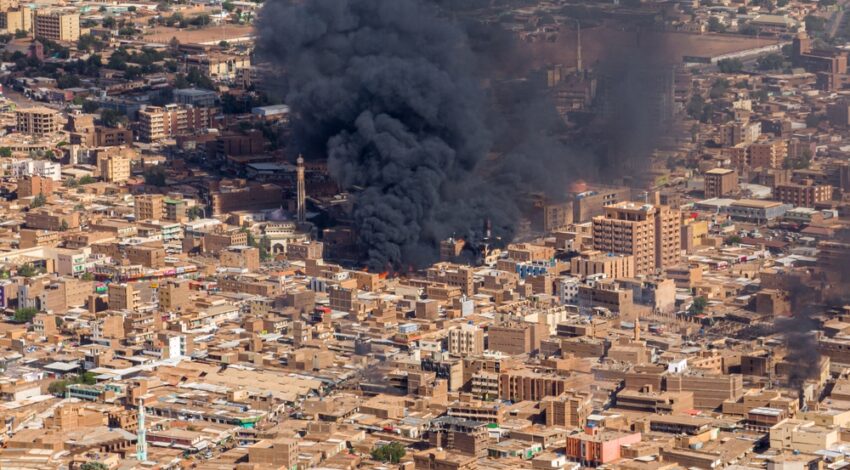
Many modern wars do not stay where they started. Prominent conflicts that have arisen in the last decade, such as those in Sudan, Ethiopia, and across the Sahel, have not remained self-contained domestic crises. Each is embedded in a regional network of refugee flows, sanctuary territory, weapons pipelines, financing channels, and external sponsorship that links multiple states into a single conflict system. Understanding these wars increasingly means understanding how conflict spreads across borders.
The risk of conflicts spreading has been exacerbated by three structural shifts:
Together, these structural shifts make conflict spread more likely. As conflicts become more interconnected, local wars increasingly evolve into regional crises as their effects extend beyond national borders through political, social and economic systems.
Modern armed conflict rarely stays within a single country. Many existing conflicts are embedded in regional networks of refugee movements, cross-border kinship, foreign sponsorship, illicit finance, and ideological affiliation. The footprint of a contemporary civil war routinely extends well beyond the country in which fighting takes place. The peacefulness of neighbouring states is now shaped largely by events those neighbours do not control.
Early studies of how conflicts spread treated geographic clustering as evidence of automatic ‘spillover’, comparing the spread of conflict to a medical infection. That framing no longer holds. The spread of conflict is neither inevitable nor driven by a single cause. It results from identifiable mechanisms, shaped by the strategic choices of states, armed groups, displaced populations, and ideological networks, and by how permissive the surrounding environment is.
The Global Peace Index 2026 groups these conflict spread mechanisms into three broad categories:
Together, they provide a practical framework for analysing how conflicts spread across borders and why some regions are more vulnerable than others.
Whether a given conflict spreads depends on which mechanisms are activated, on the density of cross-border ties, and on the institutional resilience of neighbouring states.
For a more detailed analysis of conflict spread and its underlying mechanisms, see the Global Peace Index 2026.

Global peacefulness deteriorated for the 12th consecutive year, with the number of active, state-based conflicts reaching 61. This is the highest...
Artificial Intelligence is transforming how peace and conflict are conducted, observed, and analysed. Between 2022 and 2026, the conflicts in Gaza,...
Identifying and measuring the factors that drive peace