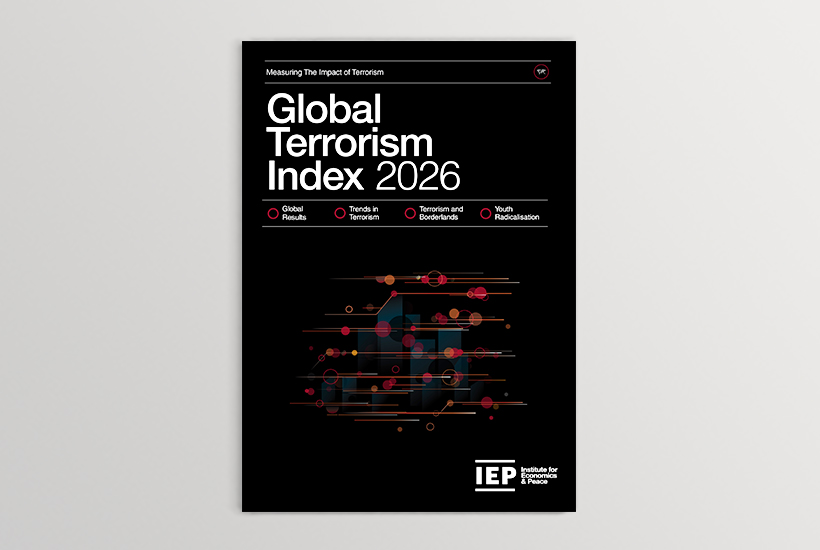
Deaths from terrorism in the West surged by 280 per cent in 2025, contrasting starkly against a global decline of 28 per cent, reveals the Global Terrorism Index 2026 (GTI).
While global deaths from terrorism reached their lowest level in a decade, this improvement may be short-lived. Many negative factors are converging in 2026, including the escalation of conflicts in Iran and South Asia, deteriorating economic prospects in the West, and the rising use of drone technology by terrorist organisations.
Seven of the 19 countries that deteriorated on the Index were Western nations, and the conditions driving that trend, such as the rapid radicalisation of youth, political polarisation, rising antisemitic violence, and the compression of online radicalisation timelines, show no signs of abating. Recent polling indicates public support for Israel is declining in several countries, while the Gaza war has coincided with increased concern about antisemitism and heightened political polarisation.
The GTI is produced by the international think tank the Institute for Economics & Peace (IEP) and has been published annually for the last 13 years. It is the most comprehensive resource on global terrorism trends and uses multiple factors to calculate its score, including the number of incidences, fatalities, injuries and hostages, before combining these with conflict and socioeconomic data to provide a holistic picture of terrorism.
“The underlying conditions that drive terrorism are worsening despite improvements seen in 2025. Unless Iran can be stabilised quickly, it risks becoming a failed state and another breeding ground for terrorist militias. The lessons from Iraq and Afghanistan are clear: when states fragment and security vacuums emerge, terrorist groups quickly exploit the instability.
Terrorist activity along ungoverned international borders has also increased substantially over the past five years, with the Pakistan-Afghanistan conflict the most recent example. Viewed in totality, these trends point to one sobering conclusion: a fracturing world order risks erasing the hard-fought gains made against terrorism over the past decade.”
– Steve Killelea, IEP Founder & Executive Chairman
Download the Global Terrorism Index 2026 Report
Iran has deteriorated nearly 30 places on the GTI over the past decade, reflecting a steady increase in the impact of terrorism driven by separatist groups on the Pakistan border area.
The GTI data shows that while terrorism deaths in the Middle East and North Africa fell by 95 per cent over the last ten years, this progress remains fragile and contingent on regional stability.
The Islamic Revolutionary Guard Corps (IRGC) has been linked to 157 terrorist plots across 15 countries in the past five years. Although Iran’s long-range capabilities have been substantially degraded, if not destroyed, groups such as Hamas, Hezbollah, and the Houthis have decentralised networks with significant capabilities for launching terrorist attacks.
In addition, the breakdown in communication with Iran means these groups, including the IRGC, are acting autonomously, resulting in unpredictable behaviour. For example, the IRGC has provided funding, training and strategic direction to over 70 militia groups in Iraq, with an estimated combined strength of at least 160,000 fighters.
Escalation of the conflict in Iran could further destabilise the region and increase the risk of groups sympathetic to Iran carrying out terrorist attacks overseas. The Iraqi government faces the prospect of being drawn into the conflict. Balancing its reliance on Iran, keeping the militias onside while responding to US pressure and avoiding US military strikes will be difficult. A sustained exchange between militias and US forces would divert Iraqi security resources, complicate international support, fragment territorial control and create local vacuums that could be exploited by the Islamic State or other militias loyal to Iran.
Explore Findings: The Iran War and the Global Terrorism Threat
Terrorism in Western nations is increasingly driven by youth radicalisation and lone-wolf actors. Children and adolescents accounted for 42 per cent of all terror-related investigations in Europe and North America in 2025, a threefold increase since 2021. The average radicalisation timeline has compressed from 16 months in 2002 to a few months today, driven by algorithmic amplification and the exploitation of developmental vulnerabilities.
An estimated 87 per cent of radicalised minors had a history of neglect or psychological abuse, while 77 per cent suffered from abandonment. Adding to the difficulty of detection, lone wolf actors carried out 93 per cent of fatal terrorist attacks in the West over the last five years and remain three times more likely to successfully execute an attack than groups.
Recruiters are leveraging platforms like Roblox, Fortnite, and Discord to establish social bonds with isolated youth, while extremist networks employ a funnel strategy originating on algorithm-driven platforms such as TikTok, Instagram, and YouTube Shorts to channel users towards increasingly extreme content before migrating interactions to encrypted messaging apps for operational planning.
Read more: How youth and online networks are reshaping contemporary terrorism
Pakistan has, for the first time, emerged as the country most impacted by terrorism, recording 1,139 deaths and 1,045 incidents in 2025, its highest level since 2013. This sharp resurgence has been driven in part by the Taliban’s return to power in Afghanistan in 2021 and the resulting increase in cross-border militant activity by the TTP and the Balochistan Liberation Army. Without reconciliation, the current Afghanistan-Pakistan conflict is likely to result in high levels of terrorism.
Border proximity is a defining feature of modern terrorism, with the GTI finding that terrorism in these areas has more than doubled over the past 15 years. Over 76 per cent of attacks occurred within 100 km of an international border in 2025, up from just under 60 per cent in 2007, with hotspots including the Ecuador-Colombia-Venezuela frontier and Central Sahel tri-border area. Regions such as the Central Sahel and Lake Chad Basin suffer from weak state control, which enables groups to recruit and operate with relative freedom.
Read more: Borderlands a focal point of terrorism evolution
The Sahel region in sub-Saharan Africa continues to be strongly impacted by terrorism. Although deaths fell in 2025, the region still accounts for over half of all terrorism-related deaths globally. Violence has also spread beyond the Central Sahel’s traditional hotspots, with JNIM launching coordinated strikes in western Mali and IS claiming its first attack in Niger’s southern Dosso region.
Nigeria and the Democratic Republic of the Congo recorded the largest increases in deaths from terrorism, with deaths rising by 46 per cent and 28 per cent respectively. In Nigeria, deaths surged in the north-west of the country amidst growing political instability related to Boko Haram, whilst in the DRC, IS-linked forces carried out several large-scale attacks along the country’s eastern border.
IS’ largest increases in impact occurred in Niger, with deaths caused by the group nearly quadrupling. Motivations for joining terrorist groups in sub-Saharan Africa contrast sharply with the West. For 71 per cent of recruits, the final catalyst for joining was human rights abuses by state security forces. Economic factors are also critical, with a quarter of voluntary recruits citing a total lack of job opportunities as their primary motivation. In regions with weak governance, armed groups exploit this vacuum by offering tangible benefits such as salaries to young people without legitimate employment prospects.
— Download the Global Terrorism Index 2026 Press Release
— Request a Media Interview
— View the Global Terrorism Index 2026 interactive map
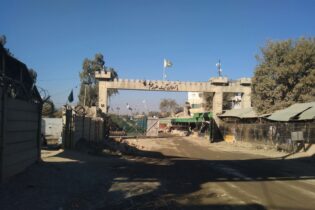
Border regions have become central to the geography of modern terrorism, reflecting a shift in how and where violent activity is concentrated.

Youth radicalisation has become a defining feature of the contemporary terrorism landscape, emerging alongside a broader shift in the nature and...
Assessment of the current state of the Iran conflict through the lens of terrorism and the...