Two decades of Global Peace Index data tell a story that goes beyond deterioration. They describe a world that has learned to live with a growing global inventory of violence and unresolved conflicts.
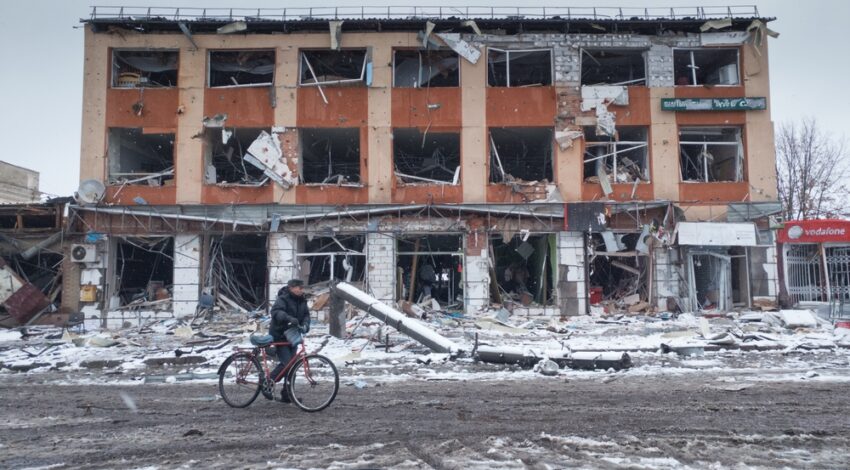
When the first Global Peace Index was published in 2008, it ranked 140 countries. The world, at least by the numbers, was in reasonable shape. Most countries were at peace and the sustained deterioration that would follow was not yet visible in the data.
Eighteen editions later, 119 of 163 countries are less peaceful than they were in 2008. The Index has recorded deterioration in 15 of 18 editions. The current consecutive run of annual decline has reached 12 years, the longest in the history of the GPI.
Between 2025 and 2026, 99 countries recorded a year-on-year deterioration in peacefulness; 62 improved. The Ongoing Conflict domain, which measures deaths from internal conflict, participation in external conflicts, and the number of active wars, recorded the sharpest deterioration. Deaths from internal conflict reached their worst average since the Index began, with 56 countries deteriorating on that indicator alone.
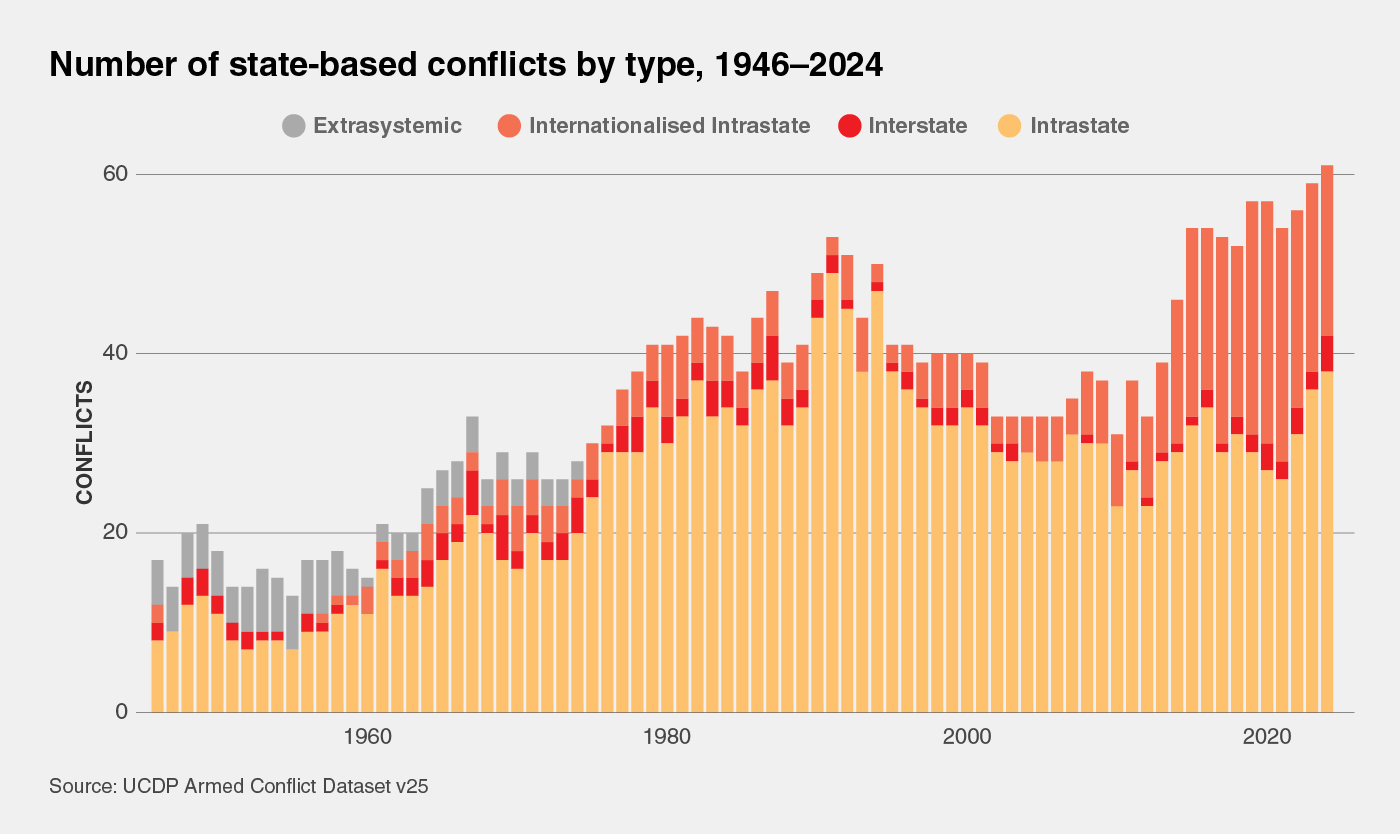
Total violent conflict deaths in 2025 exceeded 181,000. Twenty countries each recorded more than 1,000 internal conflict deaths, the highest count since the GPI began. Between 2010 and 2021, the number of conflicts globally increased 88 per cent. By 2024, there were 61 active state-based conflicts, the highest total since the end of World War II.
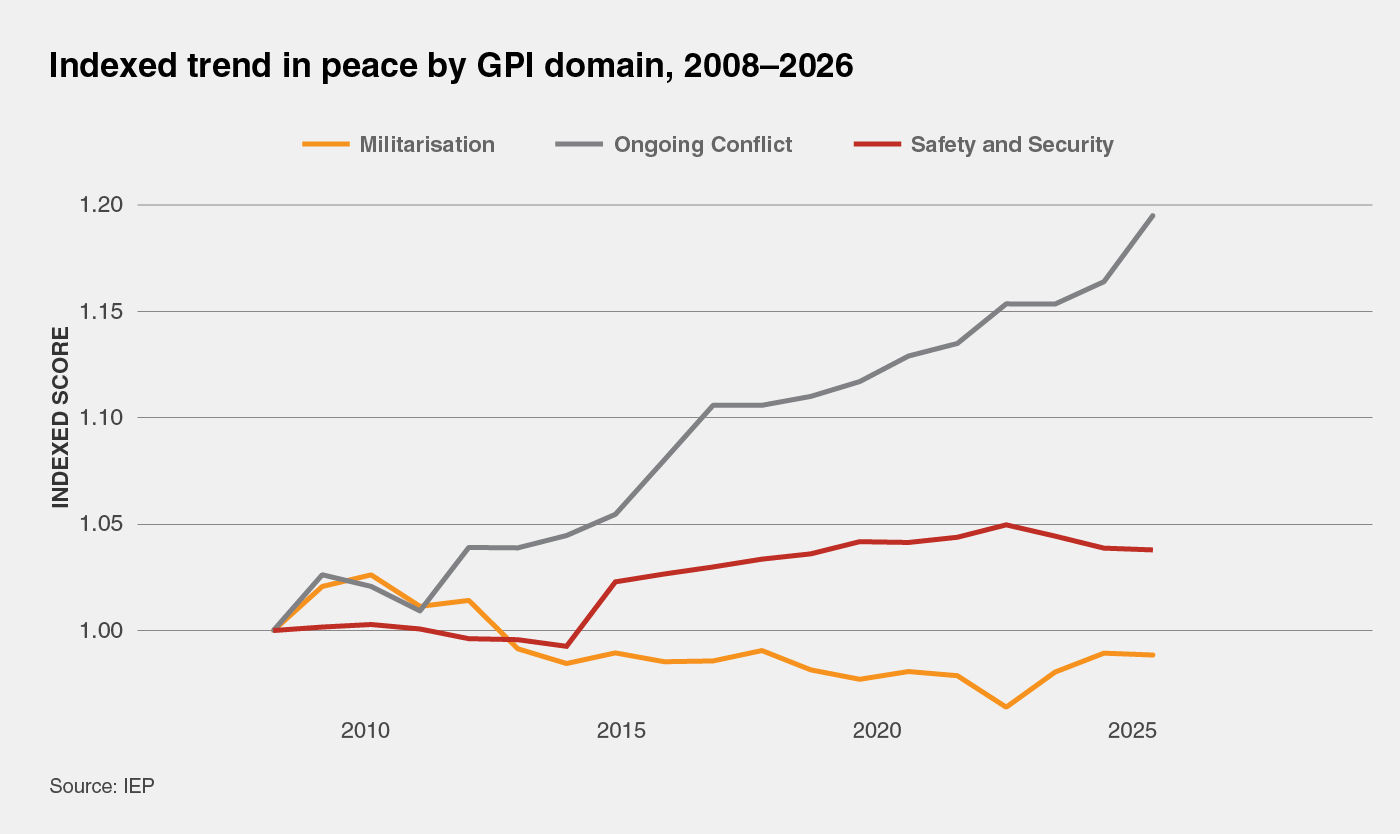
There was a large deterioration on the Ongoing Conflict domain.
Research tracked across GPI editions shows the proportion of armed conflicts ending in a decisive military victory fell from 49 per cent in the 1970s to fewer than nine per cent in the 2010s. The proportion resolved through formal peace agreements fell from 23 per cent to four per cent over the same period.
Wars are no longer won or lost, they are inconclusive and often normalised. Each active conflict adds to a permanent global inventory of ongoing violence.
Yemen has been at war since 2015. Syria has been in conflict since 2011. The Democratic Republic of the Congo has experienced overlapping armed conflicts for more than three decades. Somalia has not had a functioning central government since 1991. Ukraine entered its fourth year of full-scale war in 2026. Sudan’s civil war, which began in April 2023, had already displaced more people than any other conflict in the world within 18 months. Myanmar’s post-coup conflict, which intensified in 2021, has drawn in dozens of armed ethnic groups with no resolution in sight. These are not crises moving toward conclusion, they are features of the current international order.
“The world is experiencing the highest number of state-based conflicts since World War II.”
— GPI 2026
The nature of conflict has changed alongside its scale. In 2008, 59 countries were involved to some degree in external conflicts. By 2026, that figure was 103, or nearly two-thirds of the world. Internationalised intrastate conflicts, in which foreign states participate in wars inside another country’s borders, increased by more than 175 per cent since 2010. Proxy warfare has become a standard instrument of foreign policy.
Technology has accelerated this shift. Drone attacks rose approximately 11,500 per cent between 2018 and 2025. In that period, 565 different armed groups carried out at least one strike, including non-state actors that lacked any precision-strike capability seven years earlier. The barrier to conducting targeted attacks has collapsed, and no binding international framework to govern it has emerged.
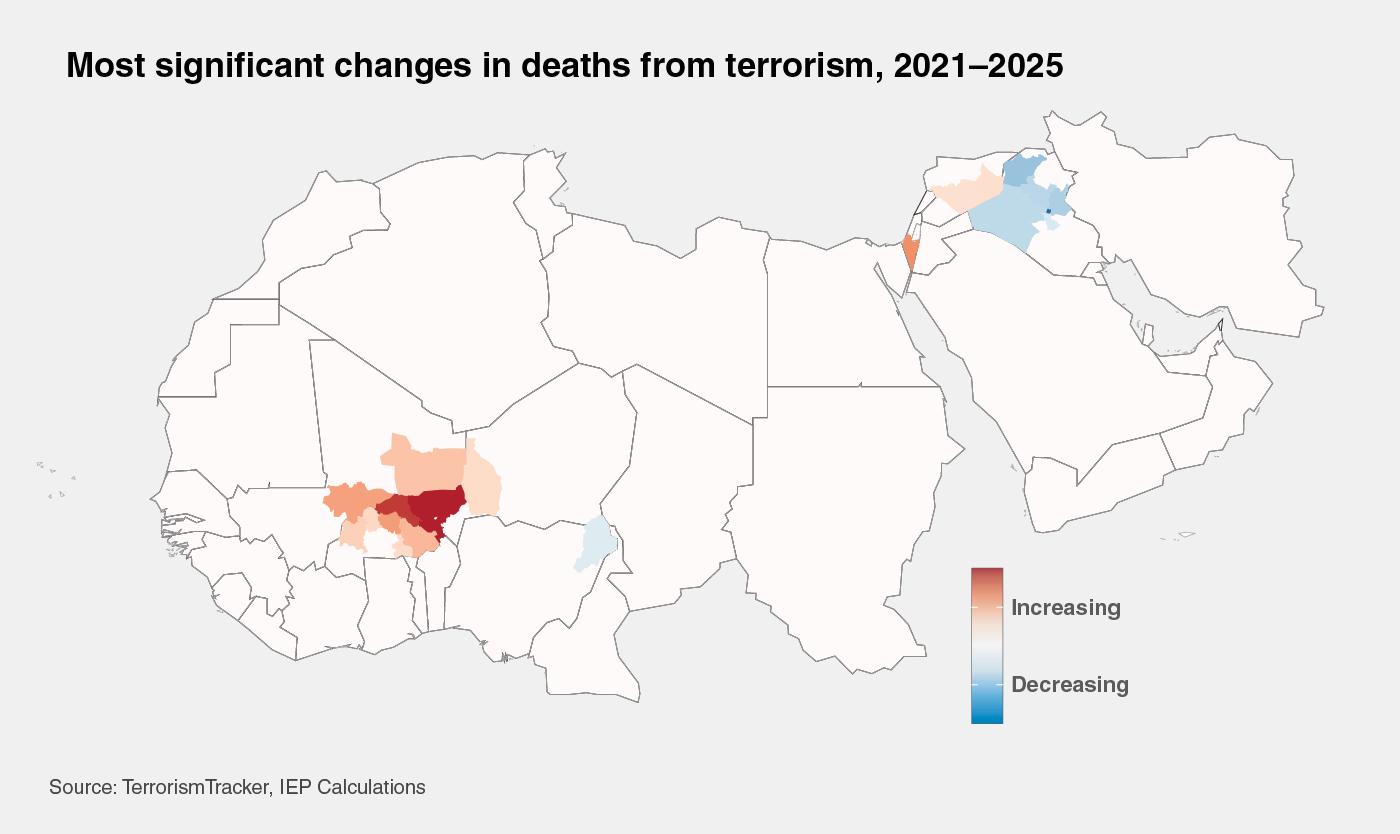
Between approximately 2015 and 2023, the global epicentre of terrorism migrated from the Middle East and North Africa to the Sahel belt of West Africa. By 2025, the Sahel accounted for more terrorism deaths than South Asia and MENA combined. Burkina Faso, which did not register as a significant terrorism concern in 2008, recorded the world’s highest terrorism impact score in 2024.
Sub-Saharan Africa’s GPI score has deteriorated 134 per cent since 2008, the largest regional deterioration in the Index’s history. South Asia has deteriorated 115 per cent; MENA 105 per cent. The global counter-terrorism apparatus in resources, attention, and military deployment has not reoriented to match this shift. The map of violence has spread, but its according response has not.
Global military expenditure reached US$2.7 trillion in 2025, a 9.4 per cent real-terms increase and the steepest annual rise since 1988. Ninety-seven of 163 countries increased their military expenditure as a share of GDP in 2026, with military spending as a percentage of GDP now at its highest level since the index began.
Meanwhile, global peacebuilding and peacekeeping expenditure was US$49.2 billion in 2025, which is just 0.5 per cent of total military spending. In 2008, that share was approximately 0.83 per cent. In absolute terms, peacebuilding spending grew. As a proportion of what the world spends on the tools of violence, it fell by nearly half. The total economic cost of violence, a measure of the resources consumed by conflict, crime, and militarisation across all economies, calculated by IEP as the economic impact if violence were not present, reached US$19.97 trillion in 2025, equivalent to 11.6 per cent of global GDP, and nearly double the US$11 trillion recorded in 2008.
Not all 23 GPI indicators have moved in the same direction.
Deaths from terrorism fell to their lowest level since 2008 in 2026, with the indicator improving 3.4 per cent. The primary driver is the territorial defeat of ISIS, whose June 2014 caliphate proclamation had pushed terrorism scores to peak levels by 2016–17. Improved counter-terrorism cooperation and intelligence sharing among states contributed to the decline, even as terrorism itself migrated to the Sahel where it remains acute.
UN peacekeeping funding recorded the largest improvement of any of the 23 GPI indicators in 2026, improving 6.2 per cent with 101 of 163 countries improving. This reflects increased multilateral financial commitment to peacekeeping operations, particularly in sub-Saharan Africa, though it is important to note the gap between funding and impact remains wide.
The Militarisation domain, which covers arms embargoes, nuclear weapons, and military spending, showed marginal overall improvement of 2.7 per cent since 2008, though this trend is now reversing sharply. The improvement was driven by arms embargo compliance and nuclear non-proliferation measures during the 2010s. The current rearmament cycle, with global military expenditure now at a record high, has begun to erase that gain.
What these exceptions share is that they were achieved through sustained international cooperation built over decades: treaty frameworks, multilateral funding mechanisms, and intelligence-sharing arrangements. They happened through deliberate institutional investment.
Terrorism deaths fell to their lowest since 2008.
The deterioration documented across 18 GPI does not guarantee the trajectory of future peacefulness. The same data that records decline also records transformation.
Bhutan ranked 69th in 2008. In 2026 it ranked 16th, a rise of 53 places driven by institutional investment in governance and well-being, not military capacity. Following Ethiopia’s Pretoria Peace Agreement in November 2022, conflict deaths in the Tigray region fell from over 100,000 annually to approximately 2,300 in 2023, a reduction of 97.7 per cent in a single year. A ceasefire, pursued and implemented, produced results that no military expenditure had.
Despite sharing a border with an active war, Poland recorded the largest single-year improvement in the 2026 GPI: 9.1 per cent, rising 23 places. Rapid improvement, even in adverse geopolitical conditions, is possible.
The 2026 GPI is the 19th edition of an Index that now covers long enough a period to distinguish structural trends from fluctuations. The structure reveals the world has deteriorated in 15 of 18 years, conflict has become harder to end, the tools of war have proliferated faster than the tools of peace, and the financial gap between military and peacebuilding spending has grown wider.
Eighteen years of GPI data documents both decline and successes. Terrorism can be reduced through coordinated international frameworks. Ceasefires, when implemented, measurably save lives. Well-governed societies sustain peacefulness even under external pressure. These are lessons the data has earned. But negative peace, stability maintained by force, suppression, or the mere absence of active war, is a delay, not a foundation. The cost of that delay accumulates in economic output lost, institutions eroded, and populations displaced. With the total economic cost of violence at US$19.97 trillion, or 11.6 per cent of global GDP, the GPI makes the price of inaction clear.
The trends described here vary significantly by region and by indicator. The factors driving deterioration in the Sahel differ from those in South Asia, Eastern Europe, or Latin America. Explore the full data in the 2026 GPI.
— Download the Global Peace Index 2026 Press Release
— Request a Media Interview
— View the Global Peace Index 2026 interactive map
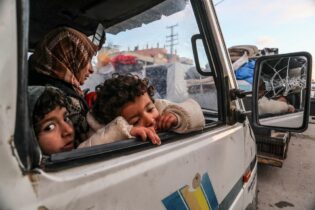
Global peacefulness deteriorated for the 12th consecutive year, with the number of active, state-based conflicts reaching 61. This is the highest...
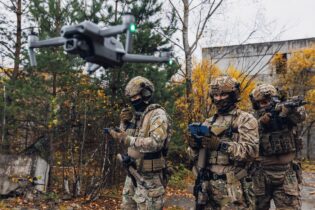
Artificial Intelligence is transforming how peace and conflict are conducted, observed, and analysed. Between 2022 and 2026, the conflicts in Gaza,...
Identifying and measuring the factors that drive peace
Identifying and measuring the factors that drive peace