Japan and Germany, both shaped by the legacy of the Second World War and long defined by restraint in military policy, are now increasing defence spending and capabilities.
Japan remains one of the most peaceful countries globally, ranked 12th in the The Global Peace Index (GPI) and firmly within the “very high peace” category. Its performance continues to be underpinned by extremely low levels of violent crime, strong social cohesion and stable institutions.
Yet, like many advanced economies, its score is increasingly influenced by rising militarisation, particularly through increased defence spending and evolving military capabilities. This structural shift has now begun to intersect with domestic political and social pressures.
In recent weeks, rare nationwide protests have taken place across Japan, with demonstrations held in more than 100 locations and drawing close to 50,000 participants. These protests were initially sparked by opposition to Prime Minister Sanae Takaichi’s proposal to revise Article 9 of Japan’s constitution, the clause that renounces war and limits the country’s military role to self defence.
In October 2025, in her first policy speech since becoming Prime Minister, Takaichi told parliament that Japan aimed to reach a defence spending goal of 2% of gross domestic product (GDP) ahead of the original target of fiscal 2027, a historic shift from its post-war norm of capping defence outlays at around 1% of GDP. The defence target underscores Takaichi’s commitment to spending she terms “proactive”, in a bid to stimulate economic growth, based on her argument that a strong economy is a prerequisite for sound fiscal policy.
“Japan must take the initiative in fundamentally strengthening its defense capabilities.” Sanae Takachi, Prime Minister of Japan
Demonstrations in Japan have grown in scale following the escalation of the Iran war, reflecting broader public concern about Japan’s potential involvement in overseas conflict. Protesters have warned that constitutional revision could fundamentally alter Japan’s post war identity, opening the door to participation in military operations abroad. Takaichi in March turned down a request by the US to send Japanese Maritime Self-Defence Forces to the strait of Hormuz, saying that any military involvement could violate the constitution.
This moment highlights a central tension within Japan’s peace profile. While the country remains highly peaceful in terms of internal stability, its external security posture is becoming more contested. The Global Peace Index captures this dynamic through its militarisation domain, where increases in defence expenditure and force capability weigh on overall peacefulness even when domestic conditions remain stable.
This shift is not occurring in isolation. It is unfolding against a backdrop of rising geopolitical uncertainty, intensifying great power competition and the highest number of active conflicts since the end of World War II. The GPI identifies this as a period of sustained deterioration in global peacefulness – with 13 of the past 17 years recording a decline in peacefulness – and militarisation increasing even among the most peaceful countries.
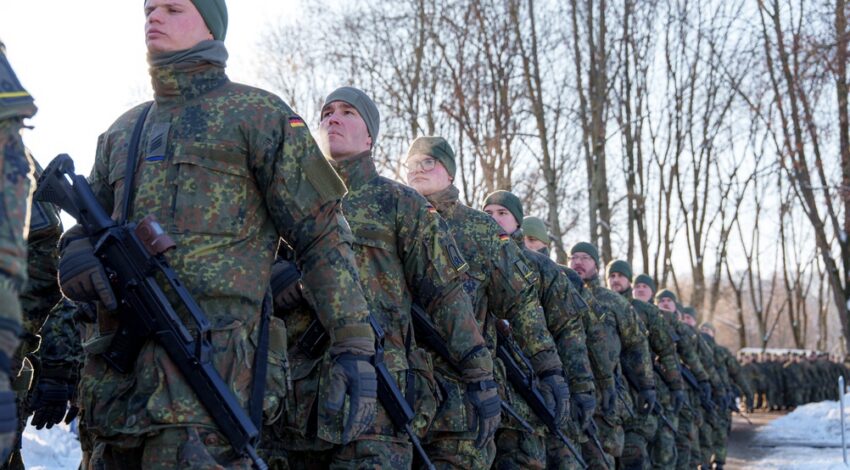
A parallel shift is underway in Germany, though driven by a different strategic context. Germany ranks 20th of 163 nations on the GPI 2025, maintaining a high level of peace relative to global averages. Like Japan, its post war identity has been shaped by restraint, multilateralism and a reluctance to project military power.
That posture is now undergoing rapid change. Germany has significantly increased defence spending, expanded troop deployments and accelerated military modernisation. Its leadership has also adopted a more direct tone regarding the security environment in Europe.

In recent statements, senior German military figures have warned that the threat from Russia represents the most serious challenge since the end of the Cold War. One senior commander described the situation bluntly, stating that “the threat is real” and that military readiness must accelerate in response. At the strategic level, Germany’s defence leadership has made clear that the country must be prepared to play a leading role in Europe’s defence architecture, particularly as uncertainty grows around long term United States security guarantees.
This shift is reinforced by broader European dynamics. Germany is now Ukraine’s largest European military supporter, delivering about $64 billion since Russia’s invasion of Ukraine in 2022, with more committed, and is investing heavily in defence production and capabilities. Across the continent, discussions are underway to strengthen independent European defence structures amid concerns about future security arrangements and the trajectory of the war in Ukraine.
The demand for rising defence budgets across NATO has sparked calls to brand arms spending as eligible for inclusion under Environmental, Social, and Governance (ESG) criteria. Proponents argue that without security there can be no sustainability. Critics counter that it amounts to “peace-washing.” Not just for NATO budgets, but also for European pension funds, sovereign wealth funds and ESG-branded investment products. The European Commission (EC), in its ReArm Europe plan, has issued guidance explaining how defence investment could align with ESG principles by contributing to the UN Sustainable Development Goal 16, Peace, Justice, and Strong Institutions.
The GPI details how Europe’s security environment is undergoing a profound transformation. In response to Russia’s invasion of Ukraine and diminishing US strategic focus on the continent, European nations are increasingly diverting funds from productive sectors of the economy such as education, healthcare, business development and infrastructure, towards military expenditure and defence buildup. This is not necessarily unjustified. However, IEP analysis finds that the primary issue for Europe is less about expenditure and more about coordination. That is to say, the continent should be less concerned about increasing spending and more focused on effectively overcoming its structural fragmentation in its defence forces to build cohesive and efficient defence capabilities.
Germany’s role is being redefined from a primarily economic power to a central pillar of European security. As with Japan, this transformation is not without domestic debate. Public opinion in both countries remains shaped by historical memory, and support for increased militarisation is often accompanied by concern about its long-term implications.
These developments reflect a broader global pattern identified in the Global Peace Index. Militarisation is increasing not only in conflict affected states but also in highly peaceful countries. This is occurring alongside a fragmentation of the international system, where multilateral cooperation is weakening and regional security dynamics are becoming more complex.
Both Japan and Germany continue to exhibit strong Positive Peace, with well functioning institutions, high levels of human capital and resilient economic systems. These attributes provide a foundation for stability and reduce the likelihood of internal conflict. However, the external environment in which they operate is becoming more contested, driving changes in defence policy that are reflected in their peace scores.
The protests in Japan and the strategic recalibration in Germany illustrate that the implications of rising militarisation extend beyond budgets and capabilities. They raise fundamental questions about national identity, the role of the military in society and the balance between deterrence and peace.
Even the most peaceful nations are not immune to the pressures of a more dangerous world, where peace is increasingly shaped not only by the absence of violence within states, but by how they navigate an international environment defined by uncertainty, competition and the risk of escalation.

The demand for rising defence budgets across NATO has sparked calls to brand arms spending as eligible for inclusion under ESG criteria. Proponents...
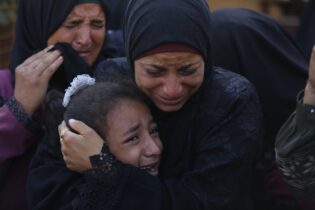
Rising conflict deaths, accelerating geopolitical tensions, and middle power assertiveness are driving ‘The Great Fragmentation’ – a...
Identifying and measuring the factors that drive peace
The rise of Middle Powers in a fractured international order