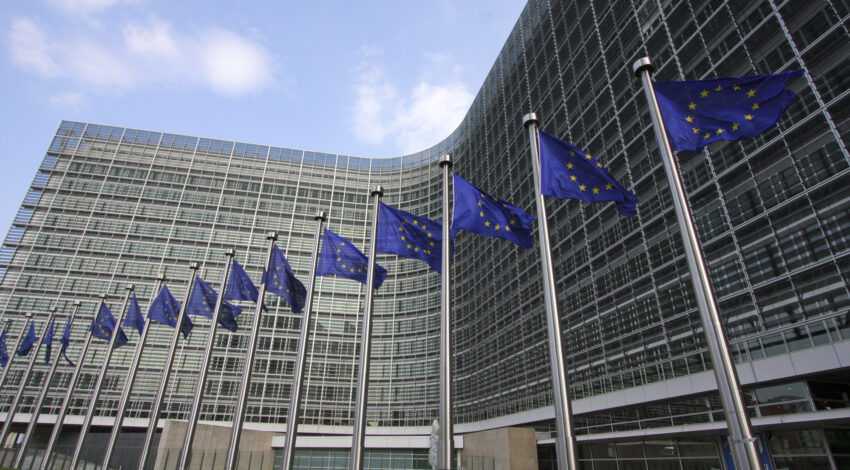
Proponents argue that without security there can be no sustainability. Critics counter that it amounts to “peace-washing.”
Europe is entering a new era of defence spending, but an intense debate is emerging over whether military investments should carry the ESG label. Not just for NATO budgets, but also for European pension funds, sovereign wealth funds and ESG-branded investment products.
The European Commission (EC), in its ReArm Europe plan, has issued guidance explaining how defence investment could align with ESG principles by contributing to the UN Sustainable Development Goal 16, Peace, Justice, and Strong Institutions.
Originally, ESG frameworks were designed to drive environmental stewardship, social responsibility, and accountable governance. Defence spending, by contrast, has long been linked with conflict and destruction. Yet the argument gaining traction in Brussels and other capitals is that military capability underpins peace, stability and democratic governance – and therefore should qualify under the “S” and “G” pillars of ESG.
The EC’s proposal for 2028-2034 foresees a near $2.3 trillion budget, with significantly higher allocations for security, Ukraine support and defence capabilities. It excludes anti-personnel mines, cluster munitions, chemical weapons and biological weapons, but Reuters reports there are major gaps: nuclear weapons, incendiary munitions, depleted uranium ammunition, blinding lasers, undetectable fragments and more remain outside the minimum legal scope.
The North Atlantic Treaty Organization is an intergovernmental military alliance founded after World War II between 32 member states – 30 in Europe plus the US and Canada. NATO said all 32 members are projected to finally meet a longstanding goal of spending 2% of their overall economic output on defence this year, while only three will meet a new goal set at 3.5% of GDP, agreed in June. The three countries were Poland, whose spending this year is projected to reach 4.5% of GDP, while Lithuania’s will be 4% and Latvia’s 3.7%.
Earlier this year 96 UK members of parliament wrote an open letter arguing that banks, investors and pension funds should treat weapons manufacturers as “ethical” investments so that more money goes to the industry to arm Ukraine and the UK. They called for financial businesses to “sweep away ill-considered anti-defence rules which are acting as a barrier to doing what is right”, in another sign of the backlash against ESG policies. Further, fund managers globally are starting to reconsider policies that stopped them from investing in defence companies for ethical reasons amid fears of missing out, as share prices in European weapons companies rise as investors react to significantly higher spending.
The debate is not merely technical. It raises profound ethical and financial questions. Supporters of including defence in ESG argue that without security there can be no sustainability. Jens Stoltenberg, NATO’s former Secretary-General (2014-2024), has repeatedly said that “defence is the foundation of freedom,” echoing a belief that peace depends on deterrence. Proponents also argue that excluding defence from ESG frameworks risks starving Europe’s security sector of investment, just when the geopolitical environment demands resilience.
Yet critics warn of greenwashing, or in this case, “peace-washing.” NGOs and human rights groups argue that equating arms production with sustainable development undermines the credibility of ESG standards. For example, the UN Principles for Responsible Investment note that investors must weigh human rights considerations, and the deployment of weapons in conflicts often results in civilian harm. And they argue that the focus on military spending, which comes on top of big increases by European countries over the past few years, overlooks the risks to security posed by environmental breakdown and social decay, and also the opportunity cost that higher military spending would pose to the continent’s climate mitigation and social programmes.
The 2025 Global Peace Index reports that global military expenditure reached an estimated $2.7 trillion in 2024, the fastest multi-year increase in recent history. At the same time, the world is living through the highest number of violent conflicts since World War Two, and the GPI again reported a decline in global peacefulness, with 59 state-based conflicts, and escalating humanitarian and economic costs.
The United Nations estimates that roughly 2 billion people – one quarter of humanity – live in places affected by conflict.


20th anniversary summit in Prague delivers clear message - the bloc must step up as US role shifts.
Focusing disproportionately on military expenditure could undermine the very stability that defence aims to protect, writes IEP Research Fellow Amir...
Exploring military capacity and capability
Identifying and measuring the factors that drive peace