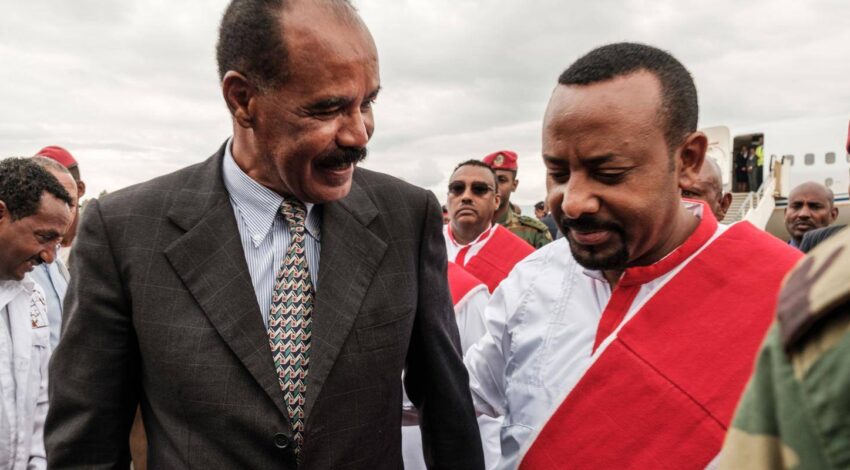
The Horn of Africa remains among the most fragile regions globally, and the relationship between Ethiopia and Eritrea, identified in the Global Peace Index 2025 (GPI) as one of the world’s highest-risk conflict dyads.
Renewed rhetoric, geopolitical manoeuvring and unresolved structural issues have revived concerns that peace in the region could unravel.
Ethiopia’s renewed push for direct access to the Red Sea has sparked renewed tensions with Eritrea. Addis Ababa’s demand for maritime access is framed as an “existential matter” by Ethiopian leaders, and some officials have raised the possibility of securing the southern port of Assab through military means should diplomatic efforts fail. A war in this region could disrupt maritime traffic, threaten Red Sea port infrastructure, and draw in outside powers invested in the area, while also further destabilising a region already contending with multiple crises.
The renewed tension has its backdrop in the legacy fallout from the northern Ethiopia war (2020–2022) and Ethiopia’s ambitions for access to the sea.
Ethiopia formally notified the United Nations Secretary-General that Eritrea was “actively preparing for war.” Addis Ababa alleged that Eritrea was collaborating with non-state actors to destabilise Ethiopia – charges that further inflamed tensions and triggered renewed mobilisation at the border. There are concerns that these frustrations over sea access, unresolved border disputes and the ongoing fallout from internal Ethiopian conflicts are combining to create an environment where miscalculation or escalation, even if not intended, could lead to renewed hostilities.
When the GPI 2025 identified Ethiopia–Eritrea as one of the four global dyads “at highest risk of rapid and severe escalation,” it did so based on structural factors: historical grievances, unresolved border demarcation, persistent militarisation, and the legacy of past wars. The recent escalation underscores how those structural vulnerabilities can re-emerge when political, economic or security circumstances change. In this case:
A key insight from the GPI 2025 is that internal instability within Ethiopia significantly elevates the dyad’s overall risk profile. Although the conflict in the northern region concluded with a peace agreement, violence in other parts of the country, including Amhara and Oromia, continues to result in loss of life, internal displacement, and the disruption of essential services.
These internal pressures compound the country’s peace challenges. Ethiopia ranks 138th out of 163 countries in the GPI 2025, placing it among the least peaceful nations globally and the lowest-ranked in Africa. This position reflects deteriorations across multiple indicators, including ongoing conflict, safety and security concerns, and heightened political instability.
Domestic conflict can weaken state institutions, strain security forces, and create openings for armed groups to operate with greater autonomy. In such contexts, border management becomes more difficult and political attention becomes inwardly focused, increasing the likelihood that unresolved issues with neighbouring states may resurface. The Ethiopia–Eritrea relationship is particularly sensitive to these dynamics.
Eritrea ranks 132nd globally in GPI 2025, also placing it in the lower quartile of the index. While the country experiences lower levels of internal armed conflict compared with some of its neighbours, it faces challenges across indicators related to militarisation, political stability, and relations with surrounding states.
The combination of two low-ranking states sharing a long and historically contested border contributes to the dyad’s fragility. In such relationships, conflict risk tends to be influenced heavily by structural factors such as political distrust, competing regional alliances, and the presence of militarised zones or disputed territories.
The GPI 2025’s risk identification does not reflect active hostilities, but highlights the vulnerability of relationships where peace remains highly dependent on political decisions, external pressures, and the capacity of institutions to manage tensions effectively.
These developments do not guarantee war, but they greatly increase the probability of miscalculation and destabilising escalation, as the GPI warns.
If tensions between Ethiopia and Eritrea were to escalate further, the consequences would likely be severe and far-reaching:
The GPI highlights several approaches that could reduce escalation risk in the Ethiopia–Eritrea context:
While Ethiopia and Eritrea are a major focus of the GPI 2025 risk assessment, the report identifies three other dyads with similarly elevated risk profiles.
The India–Pakistan dyad remains one of the world’s most enduring high-risk relationships, shaped by long-standing territorial disputes, intermittent cross-border incidents, and the presence of nuclear capabilities. Although both countries manage tensions through established diplomatic and military communication channels, the GPI notes persistent risk factors linked to political mistrust and periodic escalations along the Line of Control.
Tensions between Israel and Lebanon, particularly involving non-state armed groups operating in southern Lebanon, continue to create a volatile security environment. The GPI highlights that frequent exchanges of fire, disputed borders, and the presence of heavily militarised actors elevate the risk of escalation, even in periods when neither state seeks broader confrontation.
The Russia-Ukraine dyad remains one of the most severe conflict situations globally. Although the GPI assesses risk across both current hostilities and long-term structural factors, the ongoing nature of the conflict places this dyad among the most closely monitored in the index. Its inclusion illustrates the degree to which active conflict zones continue to influence broader regional and global security dynamics.
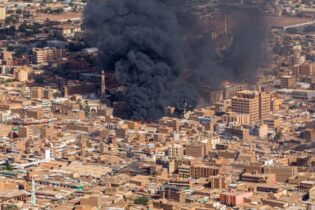
Nine factors are of critical importance in transforming simmering hostilities into full-scale conflicts.
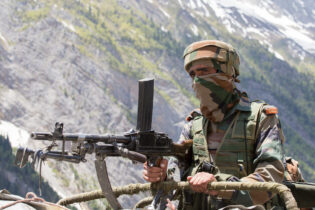
The Global Peace Index 2025 highlights a set of critical escalation hotspots, regions where conflict risks are accelerating and could evolve into...
Identifying and measuring the factors that drive peace
Analysing the factors that sustain peace.