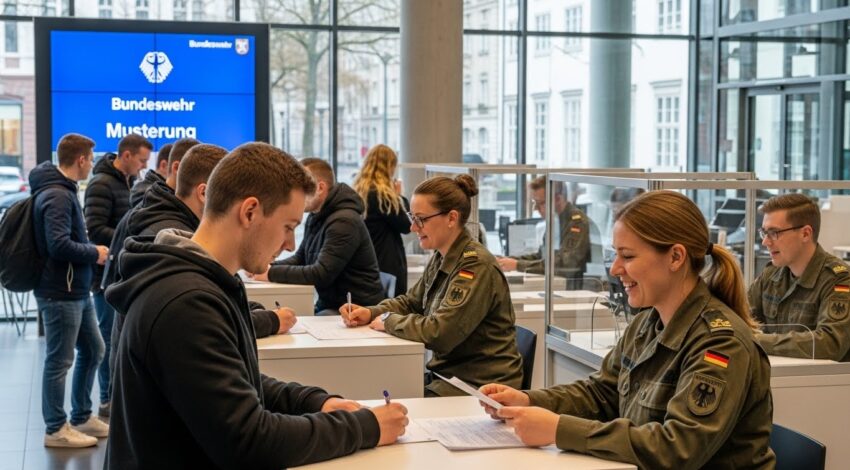
Germany’s new military service law will see all 18-year-old men screened for suitability and all 18-year-olds invited to volunteer for service from 2026. Although Berlin has stopped short of fully reinstating compulsory service, it has created a pathway to “needs-based” conscription if voluntary recruitment falls short. It follows shortly after French President Emmanuel Macron announcing the creation of a new voluntary youth military service to begin by mid-2026, which would help France respond to “accelerating threats” on the global stage.
Germany and France are not alone. An analysis for the European Parliament notes that conscription has “increasingly made its way back” onto European and global policy agendas since Russia’s invasion of Ukraine. Nordic and Baltic countries have led this shift: Lithuania and Sweden have reintroduced limited conscription, while Latvia revived its draft in 2023 to rebuild a trained reserve after years of understaffing. President of Latvia, Edgars Rinkēvičs, stated that, despite conscription’s unpopularity, “armed forces across Europe faced recruitment difficulties and conscription would help build up more capable reserve forces to deter Russia” and that “there is a need for serious discussion about conscription”. More recently, Polish Prime Minister Donald Tusk declared in March 2025 that Poland would try to have a model ready by the end of 2025 “so that every adult male … is trained in the event of war”.
Denmark, which already operated a mixed conscript-volunteer system, has moved to include women in mandatory military service, requiring them to register for conscription assessments alongside men from 2025 and lengthening service from four to eleven months. Belgium is planning to contact all 18-year-olds to invite them into voluntary service, while several other EU members are reviewing their post-Cold War professional-only forces. In October 2025, the Croatian parliament adopted a law reinstating compulsory military service after a 17-year hiatus. From January 2026, conscription will be mandatory for men aged 19 to 29, while women will have the option to volunteer. A month earlier, Latvia proposed that annual military service would be phased in by 2027 for men, with voluntary participation of women from 2028.
Ukraine, entering a fourth year of war, lowered its minimum conscription age from 27 to 25 years in April 2024, after having reinstated conscription in 2014 due to the security situation in eastern Ukraine. In November 2024, the US reportedly pressed Ukraine to lower its military recruitment age to 18 to address manpower shortages. Russia has tried to replenish its troops through conscripts, convicts and imported troops from North Korea. China adopted new conscription rules in 2023, which aim to address human resource issues. For example, former soldiers can now be mobilised as a supplement to active service units.
Security threats have become more acute. Russia’s full-scale invasion of Ukraine, growing great-power rivalry and concerns about US reliability as a security guarantor have all encouraged European states to invest more heavily in their own defence. The Global Peace Index 2025 (GPI) records that military expenditure as a share of GDP saw one of the largest year-on-year deteriorations among its indicators, contributing to a second consecutive annual decline in its Militarisation domain. Many professional armies are struggling to meet recruitment and retention targets. Persistent shortfalls in European armed forces, combined with the demands of a war of attrition in Ukraine, have revived debate over the usefulness of conscription.
Some policymakers view national or civic service as a way to strengthen social cohesion. Comparisons of conscription systems in Nordic and Baltic states suggests that carefully designed draft models can maintain broad societal links to the armed forces, creating a large trained reserve without necessarily fielding mass conscript armies. Broadly recruited forces may reduce the social distance between the military and society, which in some contexts can moderate the use of force against civilians.
Changes to conscription rules fall most directly on young adults. In Germany, school students have protested the new screening system and the broader rearmament agenda, highlighting concerns about coercion, life opportunities and the risk of normalising militarisation. The new German model illustrates how contentious design questions have become. Service is presented as voluntary, yet young men will be legally required to respond to questionnaires and may, in future, be drafted if targets are not met. All 18-year-olds will be asked if they are willing to serve, but only men must respond and undergo medical screening, reflecting constitutional restrictions and raising ongoing debates about fairness. Proposals for expanded civilian service – for example in health or social care – remain politically sensitive but could offer non-military pathways to contribute to national resilience.
The GPI 2025 notes that rising defence spending in Europe is occurring alongside increasing social tensions and declining trust in institutions; reallocating funds from employment, healthcare and education towards defence risks exacerbating these pressures if not managed carefully. In IEP’s framework, peace is more than the absence of violence. Positive Peace refers to the attitudes, institutions and structures that create and sustain peaceful societies, from well-functioning government and equitable resource distribution to good neighbourly relations and high levels of human capital.
Changes to conscription rules can influence several of these pillars.
The political economy of conscription adds another nuance: when the costs of military service and casualties are widely shared across society, there may be stronger public scrutiny of decisions to go to war. This suggests that, in some circumstances, broad-based conscription could increase democratic oversight of the use of force, but only if accompanied by robust civilian control and open debate.
Despite rising absolute military expenditures in many countries (especially in recent years), the Contemporary Trends in Militarisation emphasises that militarisation, as measured by personnel per population, has generally diminished over decades, but that the trend has turned upward in the years since the 2022 war in Ukraine. The report implies that technological improvements, force restructuring, and efficiency may have replaced mass conscript-based armies in many contexts.
For policymakers, the key question is not merely whether to have conscription, but how any form of national service is designed:
Germany’s new approach to military service is one visible sign of a broader global shift towards higher mobilisation and preparedness. For many governments, this feels like a necessary response to a deteriorating security environment. Yet from a peace perspective, it is essential to consider not only how these policies bolster deterrence, but how they interact with social cohesion, trust in institutions and long-term development.
The challenge for policymakers is to ensure that any evolution in conscription or national service contributes to Positive Peace rather than simply expanding the machinery of war. That means transparent institutions, fair treatment across society, genuine avenues for civic contribution, and sustained investment in the social foundations of peacefulness – even as security threats grow more complex.

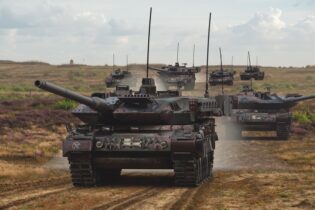
Focusing disproportionately on military expenditure could undermine the very stability that defence aims to protect, writes IEP Research Fellow Amir...
The demand for rising defence budgets across NATO has sparked calls to brand arms spending as eligible for inclusion under ESG criteria. Proponents...
Identifying and measuring the factors that drive peace
Analysing the factors that sustain peace.