While the distribution of terrorism remains highly concentrated, Pakistan has for the first time become the country most impacted by terrorism
While it has consistently been ranked among the ten countries most impacted by terrorism, Pakistan in 2025 topped the Global Terrorism Index 2026 (GTI), overtaking Burkina Faso.
Burkina Faso dropped to second place, following two consecutive years as the country most impacted by terrorism. The number of terrorism-related deaths there fell by 45 per cent, declining from 1,532 in 2024 to 846 in 2025.
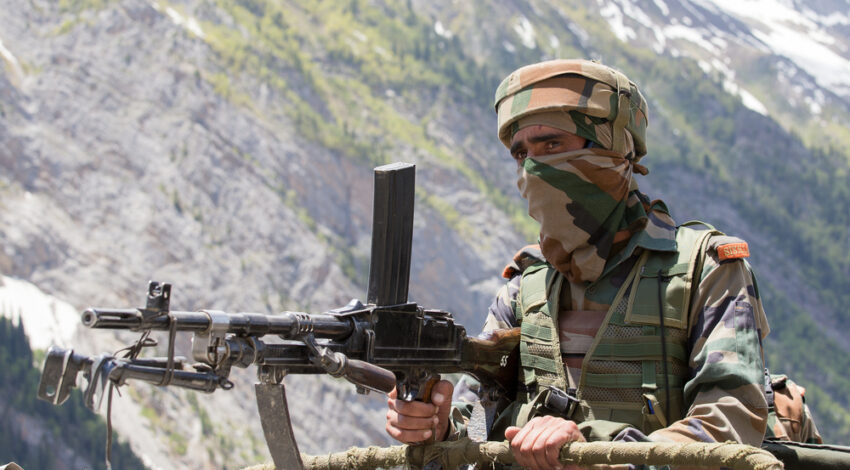
In Pakistan, the deterioration reflects a sharp escalation in activity. Deaths exceeded 1,000 in 2025, accompanied by a significant increase in the number of attacks. This marks a reversal of earlier gains and highlights the role of cross border dynamics in shaping national security outcomes. The deterioration is closely linked to militant activity along the Afghanistan-Pakistan border, where groups have taken advantage of instability following the Taliban’s return to power in Afghanistan.
Sub Saharan Africa continues to be the epicentre of terrorism, with six of the ten most affected countries located in the region. Burkina Faso, Mali, and Niger remain among the countries most severely impacted, reflecting the persistence of violence across the Sahel.
In these contexts, terrorism is closely intertwined with broader patterns of conflict, weak governance, and economic marginalisation. Armed groups operate across borders, drawing on local grievances while also exploiting regional networks and illicit economies.
The concentration of terrorism in these countries reflects a broader relationship between conflict and violence. Ninety-three per cent of all deaths from terrorism occurred in countries experiencing conflict, reinforcing the finding that terrorism is rarely an isolated phenomenon. Instead, it tends to emerge in environments characterised by political instability, weak institutions, and ongoing violence. This relationship helps explain why improvements at the global level can coexist with severe deterioration in specific countries.
The dynamics of terrorism in the most affected countries differ significantly from those observed in more stable regions. In conflict affected states, terrorist organisations often function as part of wider insurgencies, controlling territory, engaging in governance activities, and maintaining sustained campaigns of violence. This contrasts with the pattern seen in Western countries, where terrorism is more likely to take the form of isolated attacks carried out by individuals or small groups.
The Sahel illustrates how these dynamics operate at scale. The region has experienced a steady expansion of militant activity over the past decade, with groups extending their reach into new areas. This expansion is facilitated by porous borders, limited state presence, and the availability of illicit revenue streams. As a result, violence has become more diffuse, affecting both rural and urban areas and creating significant challenges for national and international responses.
Nigeria remains a key locus of activity within sub Saharan Africa, with groups such as Boko Haram and its splinter factions continuing to operate across the Lake Chad Basin. The cross border nature of this insurgency highlights the limitations of responses that are confined to individual states. Despite efforts to coordinate security operations, the scale and complexity of the challenge have allowed militant groups to sustain their activities over time.
In the Middle East, the legacy of earlier conflicts continues to shape the distribution of terrorism. Although levels of violence have declined from their peak, countries such as Iraq and Syria remain affected by the presence of extremist groups and fragmented security environments. The persistence of these conditions demonstrates the long-term impact of conflict on national security, even after the intensity of violence has decreased.
Afghanistan remains a central node in the global terrorism landscape, both as a location of ongoing activity and as a source of regional instability. The return of the Taliban has altered the balance of power within the country and across its borders, influencing the behaviour of other militant groups. The interaction between domestic dynamics and cross border networks continues to shape the trajectory of terrorism in the region.
The concentration of terrorism in a small number of countries has important implications for policy. It suggests that global improvements are heavily dependent on developments within a limited set of contexts. Progress in reducing violence in these countries can have a disproportionate impact on global figures, while deterioration can quickly reverse broader gains.
At the same time, the persistence of high levels of terrorism in these countries highlights the difficulty of addressing its underlying drivers. Weak governance, limited economic opportunities, and ongoing conflict create environments in which militant groups can recruit, operate, and sustain their activities. Efforts to counter terrorism therefore require not only security measures, but also broader strategies aimed at improving governance and development outcomes.
The relationship between terrorism and development is particularly evident in the countries most affected by violence. Many of these states rank low on measures of economic and social wellbeing, reflecting challenges such as poverty, unemployment, and limited access to education. These conditions can contribute to grievances and reduce the capacity of governments to respond effectively to security threats.
However, the drivers of terrorism are not uniform even within this group of countries. Local factors, including ethnic tensions, political dynamics, and historical legacies, play a significant role in shaping patterns of violence. This diversity underscores the importance of context specific approaches that take into account the particular characteristics of each country.
The Global Terrorism Index 2026 also highlights the interaction between local and global dynamics. While terrorism is concentrated in specific countries, it is influenced by broader trends such as geopolitical competition, the movement of fighters and resources across borders, and the diffusion of extremist ideologies. These connections mean that developments in one region can have implications for others, reinforcing the interconnected nature of contemporary security challenges.
The concentration of terrorism in a small number of countries does not diminish its global significance. Rather, it reflects the uneven distribution of risk and the complex interplay between local conditions and global trends. Understanding why certain countries are more affected than others is essential for developing effective responses and for assessing the future trajectory of terrorism.
The decline in global terrorism is a notable achievement, but it is shaped by dynamics that remain fragile. The countries most impacted by terrorism continue to face significant challenges, and their trajectories will play a central role in determining whether the broader downward trend can be sustained.
— Download the Global Terrorism Index 2026 Press Release
— Request a Media Interview
— View the Global Terrorism Index 2026 interactive map

In the wake of the widening Iran conflict, the Global Terrorism Index 2026 warns that future trends in terrorism will be shaped by emerging...
The distribution of terrorism is not only geographically concentrated, it is also highly concentrated among a small number of terror groups, led...