Border regions have become central to the geography of modern terrorism, reflecting a shift in how and where violent activity is concentrated.
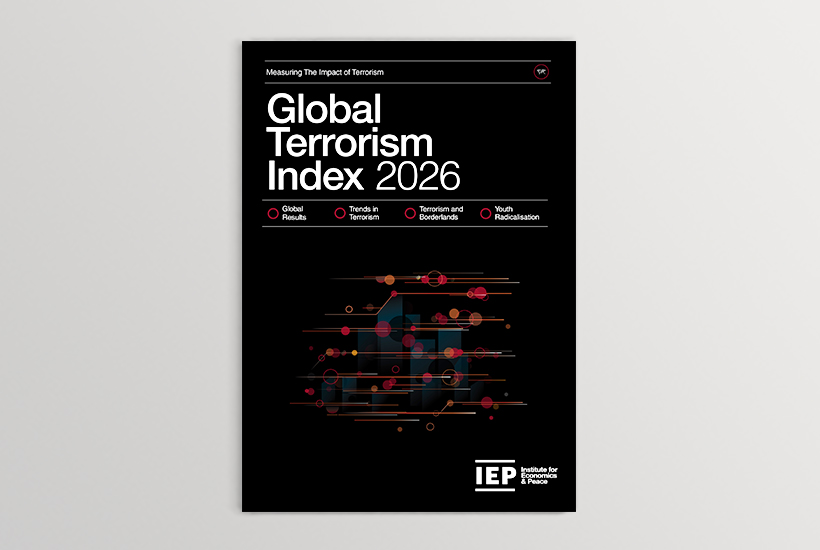
The Global Terrorism Index 2026 shows that while global terrorism has declined, the spatial dynamics of attacks have changed significantly.
In 2025, more than 76 per cent of terrorist attacks occurred within 100 kilometres of an international border, highlighting the growing importance of these peripheral zones in shaping contemporary security risks.
These areas are often characterised by limited state presence, difficult terrain, and fragmented governance. Borders frequently cut across remote regions where infrastructure is weak and oversight is limited. In such environments, the reach of the state is reduced, while the operational flexibility of non-state actors is enhanced. This asymmetry creates conditions in which militant groups can move across jurisdictions, evade enforcement, and exploit gaps in authority.
The appeal of borderlands for terrorist organisations lies in their dual function. They offer both sanctuary and opportunity. Safe havens allow groups to regroup, train, and plan operations beyond the immediate reach of security forces. At the same time, border regions provide access to illicit economies, including smuggling networks that can generate revenue and facilitate the movement of weapons, fighters, and resources. These overlapping functions make borderlands particularly resilient to conventional counterterrorism approaches that are bounded by national jurisdictions.
The increasing concentration of attacks near borders reflects a broader trend towards cross border insurgencies. Militant groups are no longer confined to operating within a single country, but instead function across regional systems. This dynamic is evident in several of the world’s most affected regions. In the Sahel, armed groups operate across Mali, Burkina Faso, and Niger, taking advantage of porous borders and limited coordination between national forces. In the Lake Chad Basin, insurgent activity spans Nigeria, Niger, Chad, and Cameroon, creating a security challenge that no single state can address in isolation.
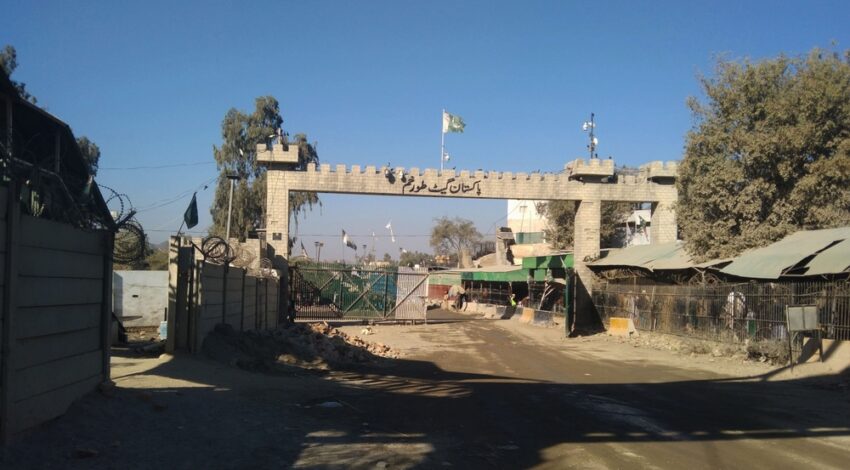
South Asia provides another example of how border dynamics shape terrorism. The deterioration of relations between Afghanistan and Pakistan has been accompanied by an increase in cross border attacks, with militant groups exploiting the frontier to conduct operations and retreat across the boundary. These patterns highlight how political tensions between neighbouring states can further complicate efforts to manage security in border regions.
The strategic value of borderlands is also linked to geography. Many international boundaries are drawn through mountainous regions, deserts, forests, and river systems that are inherently difficult to monitor. These landscapes provide natural cover for militant activity and limit the effectiveness of surveillance and enforcement. Even where states invest in border security, the scale and complexity of the terrain often make comprehensive control impractical.
In addition to physical geography, social and economic factors contribute to the vulnerability of border regions. Communities in these areas often share ethnic, linguistic, and cultural ties that span national boundaries. While these connections can support legitimate cross border interaction, they can also facilitate the movement of armed groups and complicate efforts to distinguish between civilian and militant activity. In some cases, local populations may rely on informal or illicit economies for their livelihoods, further entrenching networks that can be exploited by terrorist organisations.
The role of illicit trade is particularly significant. Commodities such as timber, minerals, and agricultural products can be moved across borders with limited oversight, providing a source of income for armed groups. These activities are often embedded within broader smuggling networks that also facilitate the trafficking of weapons and people. The integration of terrorism with transnational crime strengthens the resilience of these groups and increases the difficulty of disrupting their operations.
The data in the Global Terrorism Index 2026 indicates that the distribution of attacks within border regions is not uniform. The zone between 10-100km from a border appears to offer the most favourable conditions for terrorist activity. Areas very close to the border may be subject to increased surveillance, while locations further inland may be more firmly within the control of state authorities. The intermediate zone provides a balance between access to cross border movement and sufficient distance to reduce the immediate risk of detection.
This spatial pattern underscores the limitations of approaches that focus solely on securing border lines. While physical barriers and increased patrols can play a role, they do not address the underlying conditions that make borderlands attractive to militant groups. Effective responses require coordination between neighbouring states, as well as efforts to strengthen governance, economic opportunities, and community resilience in these regions.
The persistence of terrorism in borderlands is closely linked to broader trends identified in the GTI 2026. Conflict remains the primary driver of terrorism, with 93 per cent of deaths occurring in countries experiencing high levels of violence. Border regions within or adjacent to these conflict zones are particularly vulnerable, as instability on one side of a boundary can quickly spill over into neighbouring areas. This creates a cycle in which violence becomes regionalised, further complicating efforts to contain it.
At the same time, the fragmentation of the global order is influencing how border related threats evolve. As international cooperation becomes more strained and geopolitical tensions increase, the capacity for coordinated responses to transnational challenges may weaken. This has implications for border security, which often relies on information sharing, joint operations, and diplomatic engagement between states.
The interaction between border dynamics and other emerging trends, such as youth radicalisation and the rise of lone actors, adds further complexity. While many of these phenomena are most visible in different contexts, they are not entirely separate. Online networks can connect individuals across borders, while physical borderlands provide spaces in which more organised forms of militant activity can persist. Together, these developments point to a more interconnected and adaptive threat environment.
The Global Terrorism Index 2026 highlights that although overall levels of terrorism have declined, the conditions that sustain it are evolving. Borderlands have become a focal point of this evolution, reflecting both the opportunities they provide to non-state actors and the constraints faced by state-based responses. Understanding the role of these regions is essential for assessing the future trajectory of terrorism and the broader challenges to peace and security in an increasingly interconnected world.
— Download the Global Terrorism Index 2026 Press Release
— Request a Media Interview
— View the Global Terrorism Index 2026 interactive map
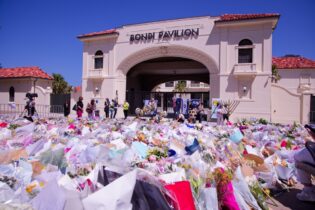
In the wake of the widening Iran conflict, the Global Terrorism Index 2026 warns that future trends in terrorism will be shaped by emerging...

The distribution of terrorism is not only geographically concentrated, it is also highly concentrated among a small number of terror groups, led...
Assessment of the current state of the Iran conflict through the lens of terrorism and the...