The Pacific is the most aid-reliant region in the world. Along with the impact of climate change, the geopolitical battle for influence there is also heating up, explains Yanni Chow
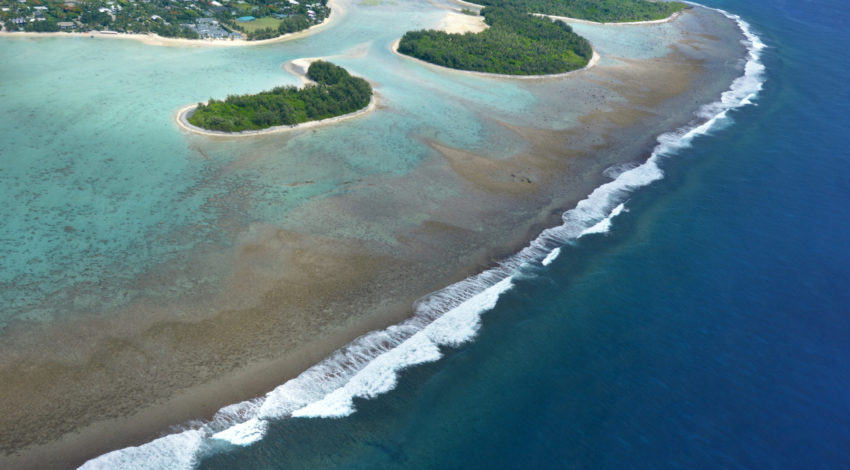
The 2025 Pacific Islands Forum (PIF), hosted by the Solomon Islands, represents a significant departure from established diplomatic practice, with the host nation excluding nearly two dozen external countries, including major aid donors the United States and China, to avoid tensions over Taiwan’s participation.
While Prime Minister Jeremiah Manele defended this decision as being in the region’s best interest, opposition politician Peter Kenilorea Jr noted that “we know this issue is all about China and Taiwan.” This exclusion carries particular significance given that the Pacific Islands constitute one of the world’s most aid-dependent regions, where development assistance serves as both an essential lifeline and a source of strategic vulnerability.
Pacific Island nations receive the highest level of Official Development Assistance (ODA) per capita globally, with funding increasing by 80 per cent over the past decade. Australia is the largest donor in the region, followed by China, which has surpassed the US in recent years.

Chinese engagement has intensified significantly since the 2017 inclusion of Pacific nations in the Belt and Road Initiative. Beijing has committed billions in infrastructure investments across the region, including the $60 million Faleolo International Airport terminal upgrade in Samoa, a $230 million domestic submarine cable network in Papua New Guinea, and a $53 million national stadium in Solomon Islands.
These projects, typically financed through concessional loans, have created substantial debt obligations. The World Bank’s International Debt Report 2024 indicates that Tonga’s external debt totals $196 million, with nearly half owed to China. World Bank analysis from 2023 identified six Pacific countries as facing high risk of debt distress, potentially constraining government spending on essential services and climate adaptation.
| Key infrastructure projects in Pacific island nations with China loans | |||
|---|---|---|---|
| Country | Project | Loan (USD) | Year completed |
| Solomon Islands | National Stadium for the 2023 Pacific Games | 53 million | 2023 |
| Papua New Guinea | Domestic Submarine Cable Network | 230 million | 2020 |
| Samoa | Faleolo International Airport terminal upgrade | 60 million | 2018 |
| Tonga | Nuku’alofa CBD reconstruction project | 63 million | 2012 |
| Vanuatu | Road upgrade in Tanna and Malekula (Phases I and II) | 105 million | 2019 |
Source: Lowy Institute
These dependencies intersect critically with environmental vulnerabilities. IEP’s Ecological Threat Report 2024 identifies small, low-lying island countries such as Tuvalu and Kiribati among the world’s most vulnerable to climate change impacts. Rising sea levels compel these nations to seek international partnerships and adaptation financing as an existential necessity.
Recent setbacks in global environmental governance, including the collapse of plastic treaty negotiations, have further highlighted the region’s exposure to environmental challenges largely generated elsewhere. As Palau’s representative noted on behalf of Island states: “It is unjust for us to face the brunt of yet another global environmental crisis we contribute minimally to.”
Aid relationships have evolved beyond economic assistance into diplomatic and security spheres. China has successfully encouraged several Pacific nations to switch diplomatic recognition from Taiwan to Beijing, reducing Taiwan’s diplomatic allies in the region from six to three over recent years, now comprising only Marshall Islands, Palau and Tuvalu. China’s joint statement from the May 2025 China-Pacific Island Countries Foreign Ministers’ Meeting reinforced the “One China” policy among signatories. Security cooperation has also expanded, notably through China’s 2022 security agreement with Solomon Islands permitting Chinese personnel and vessel deployment, alongside police cooperation and equipment donations to countries including Kiribati and Samoa.
The current diplomatic tensions reflect broader questions about regional autonomy and external influence, reflected in New Zealand Foreign Minister Winston Peters’ observation that “it is more important than ever that the region stands together and sets our own agenda – rather than being pressured or even dictated to by external influences”.
The PIF’s exclusion of major powers from the 2025 conference demonstrates a level of assertiveness by Pacific Island nations. While aid dependence remains a structural reality, the region has signalled an intention of increased self-determination as it balances development partnerships that help address climate and development needs, while respecting Pacific Island agency.
As donor countries reduce aid budgets, and recipient countries struggle to repay their debt, the risk of economic disruption and social unrest is...

Unlike the bipolar structure that prevailed in most of the 20th-century Cold War, the current global landscape is shaped by technological dominance,...
Identifying and measuring the factors that drive peace
Tracking the trends shaping international relations